Skip to content
OsteoPerio
Back to the Academy index

OsteoPerio Academy / Imaging, virtual planning & surgical guides

Digital planning & guided surgery

Five illustrated English chapters cover the six topics in this initial learning map: digital records, registration, restorative planning, guide design and production, and guided clinical workflows. Connect implant, sinus and periodontal–orthodontic purposes with clinical verification and handover. Clinical review remains pending; further development continues.

Five connected chapters

From records to a verified surgical plan.

Five chapters cover all six topics in this initial English map; guide design and production share one chapter. Start with records and registration, connect the restorative plan, then compare guide design, production and guided implant, sinus and periodontal–orthodontic workflows. Clinical review and further development continue.

  1. 01Focused English chapter

    Digital records & case planning

    Connect the clinical question, imaging, surface data and proposed teeth. Inspect registration and record what still needs clarification.

    • Clinical and restorative records
    • CBCT and optical surface data
    • Registration and quality checks
    Study digital records
  2. 02Focused English chapter

    Data registration & verification

    Inspect how radiographic volumes and optical surfaces are aligned. Review distributed reference regions, relevant sections and unresolved uncertainty before relying on the combined planning scene.

    • Source data and reference regions
    • Surface and sectional inspection
    • Uncertainty and verification decisions
    Study registration
  3. 03Focused English chapter

    Restoratively driven implant planning

    Follow the proposed restoration through anatomy, tissue needs, implant distribution and treatment stages. Study the existing bridge-planning film within the chapter.

    • Proposed teeth and function
    • Bone and soft-tissue relationships
    • Two bridges: three + two implants
    Study restorative planning
  4. 04Focused English chapter

    Guide design, production & verification

    Follow the complete guide workflow, explore eight learning modules and discuss OsteoPerio design, STL delivery or a printed guide.

    • Support, design and production
    • Fit, handover and clinical checks
    • Training, STL and printed-guide enquiries
    Explore surgical guides
  5. 05Focused English chapter

    Guided clinical workflows

    Compare implant trajectories, sinus-window positioning and periodontal–orthodontic guide functions. Follow a branching teaching pathway through records, clinical transfer, uncertainty and handover.

    • Implant, sinus and interdisciplinary purposes
    • Guide functions, fit and changed records
    • Clinical handover and evidence limits
    Study guided workflows

For qualified dentists and postgraduate clinicians. New teaching content is pending clinical review. The learning map is not a complete operative protocol or a scheduled course.

From the current library

Existing material in this subject.

Digital planning · Real clinical examples

Digital planning in everyday clinical practice.

Learn how to connect clinical records, the intended restoration and a surgical plan. Explore the decisions behind implant positioning and guide design with Dr. Sahand Shirzadi Maryan and Dr. Sergi Rivas Frau.

Our teaching also explores digital planning for sinus access and horizontal and vertical bone reconstruction, with the approach selected around the clinical problem.

Inside a planning case

1 min 24 sec · No narration

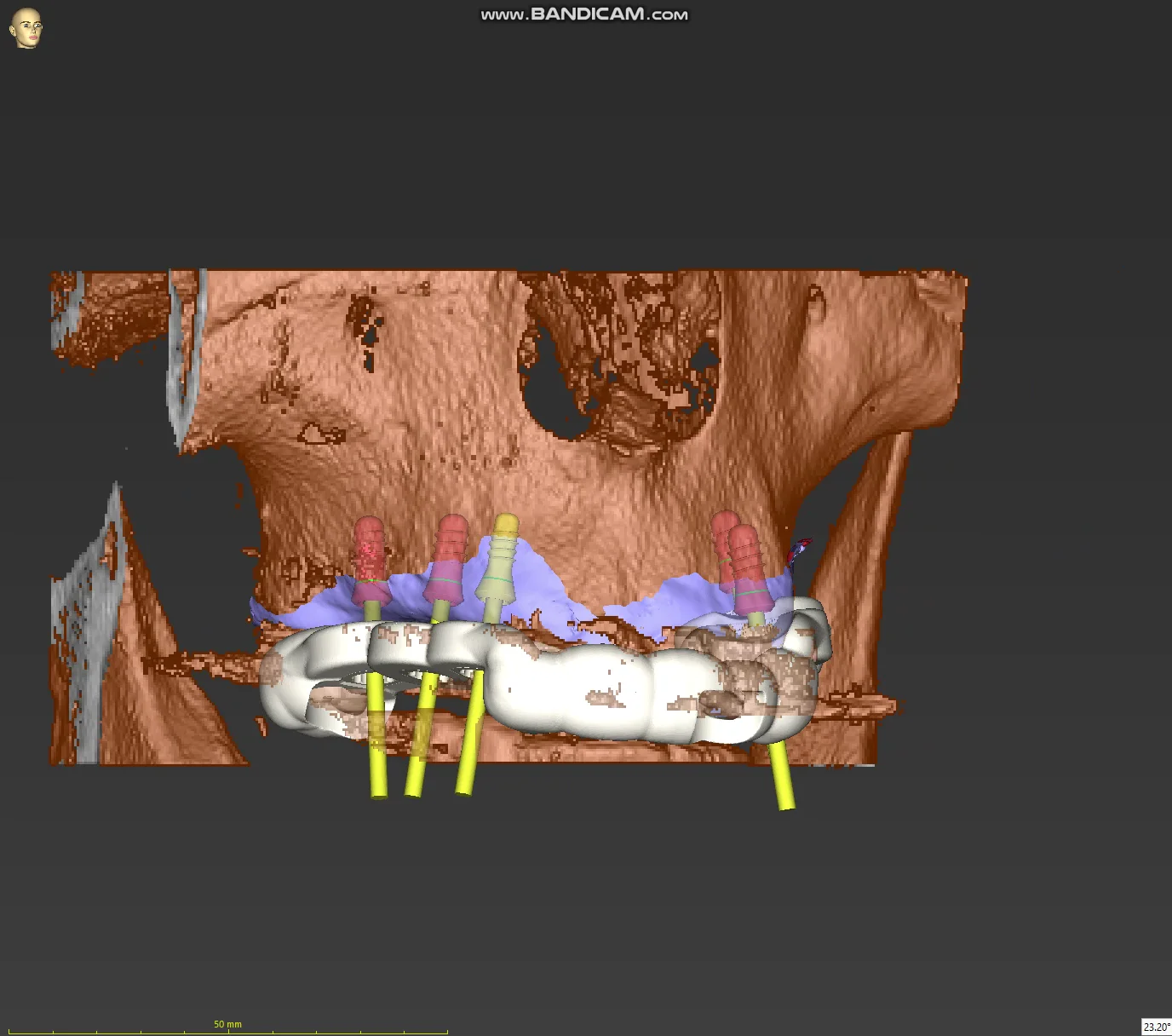
An upper-jaw planning model for two separate bridges, supported by three implants and two implants, with bone anatomy and guide components

Two upper-jaw implant bridges: three implants + two implants.

The rotating coDiagnostiX view shows the plan for two separate upper-jaw bridges: one supported by three implants and the other by two. This is a partial-arch restoration, not a full-arch bridge. Surface scans, bone anatomy and restorative and guide components help explain the planning relationships.

A digital planning demonstration. The implant number, guide design and treatment stages are specific to the individual case.

What to look for

Follow the reasoning behind the plan.

The records together
How do the surface scan, bone anatomy and proposed teeth relate to each other?
The intended restoration
How does the restorative goal inform the position and distribution of the planned implants?
The guide and its purpose
Which parts of the agreed plan should the guide help transfer, and what still needs clinical verification?

Prepare. Plan. Discuss.

Selected articles and theoretical preparation give the case its context. We discuss indications, alternatives, limitations and how the planning decisions apply to your own clinical practice.

The learning pathway

Connect each step with the next.

  1. 01

    Read the records

    Connect the examination, photographs, surface scans and appropriate three-dimensional imaging.

  2. 02

    Define the restoration

    Start with the intended teeth, function and cleaning access, then consider their supporting tissues.

  3. 03

    Build the digital plan

    Discuss implant positions, the available anatomy and whether regeneration or separate stages are needed.

  4. 04

    Design and verify the guide

    Understand its purpose, support and fit, and how the design relates to the agreed surgical plan.

  5. 05

    Connect the plan with care

    Relate planning decisions to clinical checks, surgical judgement and the subsequent review.

Bring your learning goals into the discussion.

Tell us your clinical experience and where you want to use digital planning. We can discuss an individually arranged workshop or mentorship, with content and practical activities agreed in advance.

Discuss digital planning training

For qualified dentists. Dates, teaching language, content and fees are confirmed individually. Observation and practical exercises are included only when agreed; supervised patient treatment remains a separate programme in preparation.

A technique may connect several disciplines. Follow the related subject rather than repeating the same chapter in different places.

Bring this subject into your training.

Explore individually arranged observation, mentorship and workshops with the team.

Compare learning formats