Internal · transcrestal
Through the implant site
The sinus floor is approached through the site prepared for the implant. This may be suitable when a more limited increase in height is needed and enough bone remains.
Sinus lift · Dental implants in Barcelona
A sinus lift may be considered when there is not enough bone for upper back tooth implants. It raises the sinus lining to create space for bone beneath it. In Barcelona, we assess your bone and sinus health before explaining the options, implant timing and follow-up for your case.
Private care with Dr. Sahand Shirzadi Maryan and/or Dr. Sergi Rivas Frau, according to your treatment plan.
Appointments take place at collaborating dental clinics in Barcelona. The clinical location is confirmed when your visit is arranged.
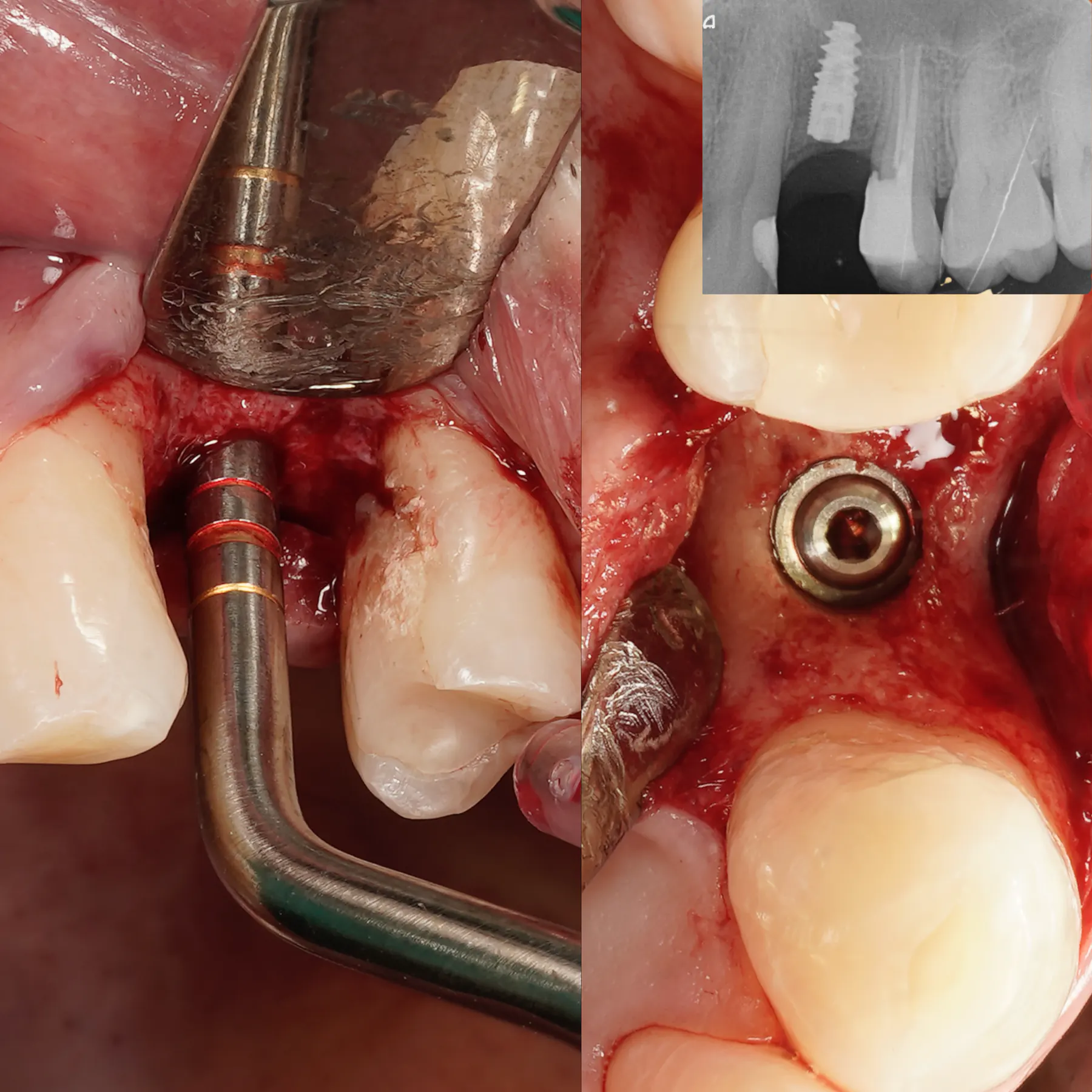
Surgical views & implant radiograph
This clinical composite illustrates surgical stages. It does not show a healed result or predict the treatment you may need. Individual outcomes vary.
Explore a sinus lift caseUnderstanding the anatomy
The maxillary sinus is an air space above the upper back teeth. A sinus lift raises its lining to create space for bone beneath it. The approach depends on the available bone and the planned implant.
Internal · transcrestal
The sinus floor is approached through the site prepared for the implant. This may be suitable when a more limited increase in height is needed and enough bone remains.
External · lateral window
A small opening provides access to the sinus lining from the cheek side. This approach may be considered when a greater increase in bone height is required.
A sinus lift is one possible part of implant treatment. Ask whether a different implant plan, a bridge, a removable denture or accepting the space could meet your needs.
A real planning and surgical sequence
See the guide being designed digitally, the printed guide and its use during a lateral-window procedure. This example shows one possible approach; your own technique and treatment stages depend on your assessment.
The guide shown here is designed for the sinus access window. The decision about when to place implants is a separate part of the treatment plan.
01–02 · Planning video
Play the 40-second video · no sound
Upper view: digital planning. The software view rotates around the three-dimensional anatomy and shows the guide design.
Lower view: the printed guide. The physical guide is shown beneath the digital planning sequence.
Open the planning video03 · During surgery
Clinical photographs · contains surgical views
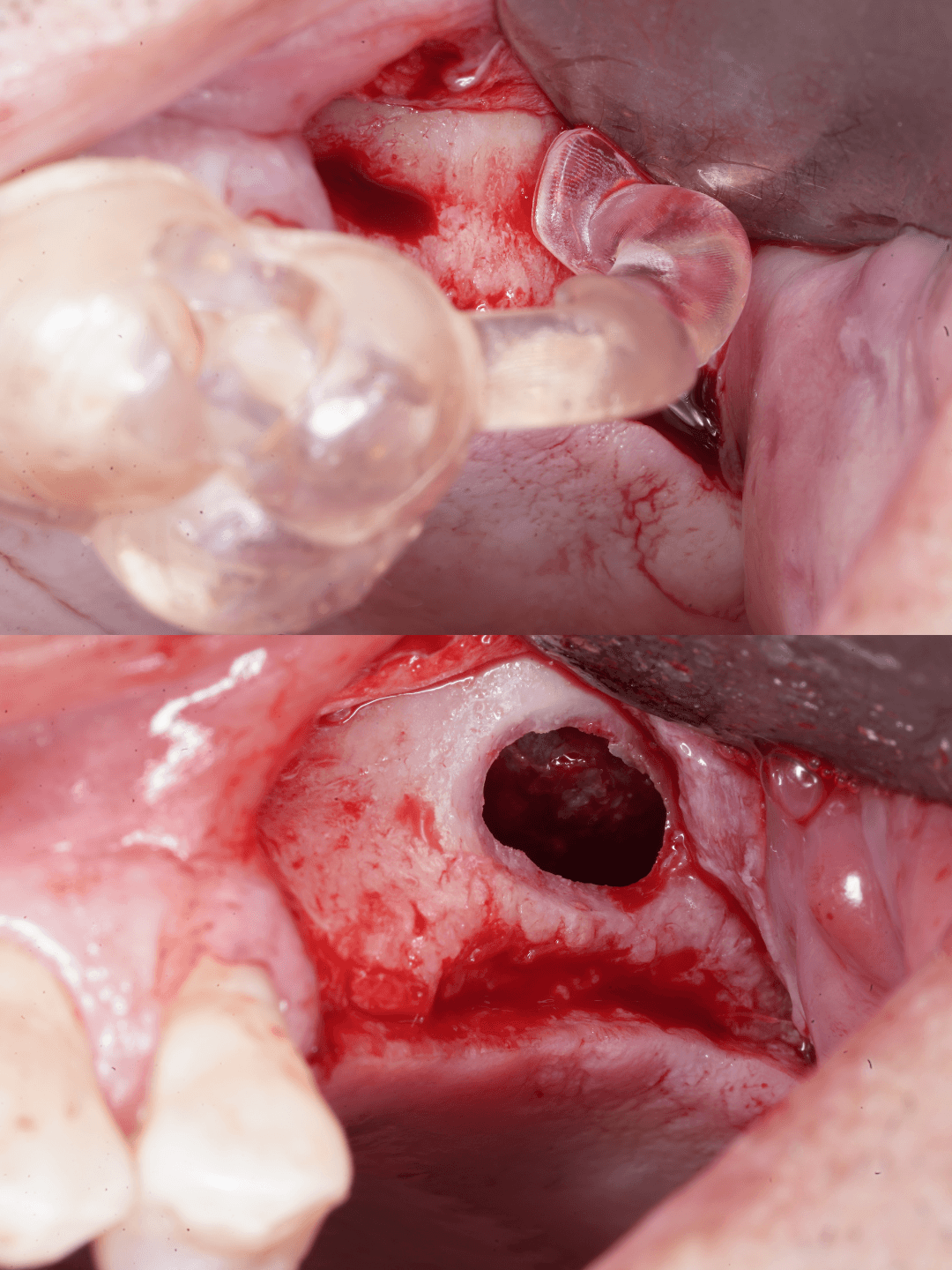
Upper photograph: guide in position. The printed guide is placed at the planned surgical site.
Lower photograph: after window osteotomy. The opening made in the side of the bone is visible after preparation of the lateral window.
View the surgical photographs at full sizeThese records show planning and intraoperative stages, not a healed result. They do not establish whether you need a guide, a sinus lift or implants at the same operation.
The sequence matters
Sinus augmentation and implant placement may be combined when the existing bone can provide sufficient initial implant stability and the clinical conditions are suitable.
In other cases, augmentation comes first. Healing is assessed before implant placement is planned, adding a separate stage to treatment.
The crown or bridge is a further part of the plan. Implant placement does not itself complete tooth replacement; healing and the restorative assessment determine when the implant can support teeth.
From your first enquiry
A clinical examination and appropriate imaging, including CBCT when indicated, help assess the remaining bone and the sinus above it. Tell us about previous sinus problems and dental treatment.
The proposed tooth position, available bone and sinus health guide the plan. Discuss the approach, alternatives, any graft material and whether a medical or ENT assessment is needed first.
Private surgery is provided by Sahand and/or Sergi according to your plan. Clarify fees, temporary teeth, review visits and the possibility that findings during surgery could change the sequence.
Follow-up is normally with our periodontist team. The plan should identify who provides the final crown or bridge, when that stage can begin and how ongoing maintenance will be arranged.
Protecting healing
Soreness, swelling, bruising and a feeling of sinus congestion can occur. Follow your surgeon’s instructions, including precautions about nose blowing. Contact the treating team for worsening symptoms, persistent bleeding or fever.
Before choosing a date, discuss work, exercise, travel and planned reviews. Ask for written aftercare instructions and a contact route for concerns during recovery.
The sinus lining can tear, which may require repair or postponement. Infection or insufficient bone formation can require further treatment, sometimes including graft removal.
Your assessment includes sinus health and other factors that may affect suitability. Ask which risks apply to you, how complications would be managed and what alternatives remain if the intended result is not achieved.
Your questions
No. The amount and shape of the remaining bone, the position of the sinus and the proposed implant all matter. Assessment establishes whether augmentation is needed or whether another implant or tooth-replacement plan is suitable.
The choice is made after assessing your anatomy and the planned implant position. Ask why an internal or lateral approach is proposed, what it is expected to achieve and whether implant placement would happen at the same operation.
These are separate decisions. An implant may be placed during a sinus lift in a suitable case, but this does not mean a crown can be fitted or used for chewing immediately. Your plan should explain each stage, including any temporary tooth.
Tell the team about ongoing nasal symptoms, recurrent sinus infections and previous sinus treatment. These findings may affect suitability or timing, and a medical or ear, nose and throat (ENT) assessment may be needed before dental surgery.
Yes. Ask which material is proposed, where it comes from and why it is being recommended. Mention any personal preferences before agreeing to treatment so the team can discuss the available choices and their limitations.
The schedule depends on whether grafting and implant placement are combined, how the tissues heal and the restorative work required. Ask for an individual sequence of visits; a date for the final teeth cannot be confirmed from an online enquiry.
Discuss your journey with the treating team before booking flights. The procedure, your sinus health and review needs determine the advice. Agree where follow-up will take place and how to obtain help after returning home.
Ask whether assessment and imaging, sinus surgery and materials, implants, temporary and final teeth, and follow-up are included or quoted separately. The written plan should also explain how an additional stage or a change in treatment would be handled.
The separate programme is still in preparation and is not available to book. Its intended operators are qualified dentists undertaking further clinical training with OsteoPerio, with both Sahand and Sergi present during surgery. Eligibility for sinus lift treatment has not been confirmed.
For patients in Barcelona and abroad
Tell us what you have been advised and whether you already have dental scans. A brief enquiry is enough to begin; the team can explain which records may help with your assessment.
An enquiry does not confirm an appointment or treatment suitability. Please contact us before booking travel.