Connective tissue graft
Tissue from beneath the surface of the palate can add thickness around teeth or implants. Around teeth, it may also be used with gum repositioning to cover exposed roots.
Gum tissue care · Barcelona
Thin gum tissue, difficult cleaning or a change in the gum contour can prompt an assessment. We explain whether grafting could help and what it would aim to achieve.
Private care with Dr. Sahand Shirzadi Maryan and Dr. Sergi Rivas Frau, for patients in Barcelona and those visiting from abroad.
Appointments take place at collaborating dental clinics in Barcelona. The clinical location is confirmed when your visit is arranged.
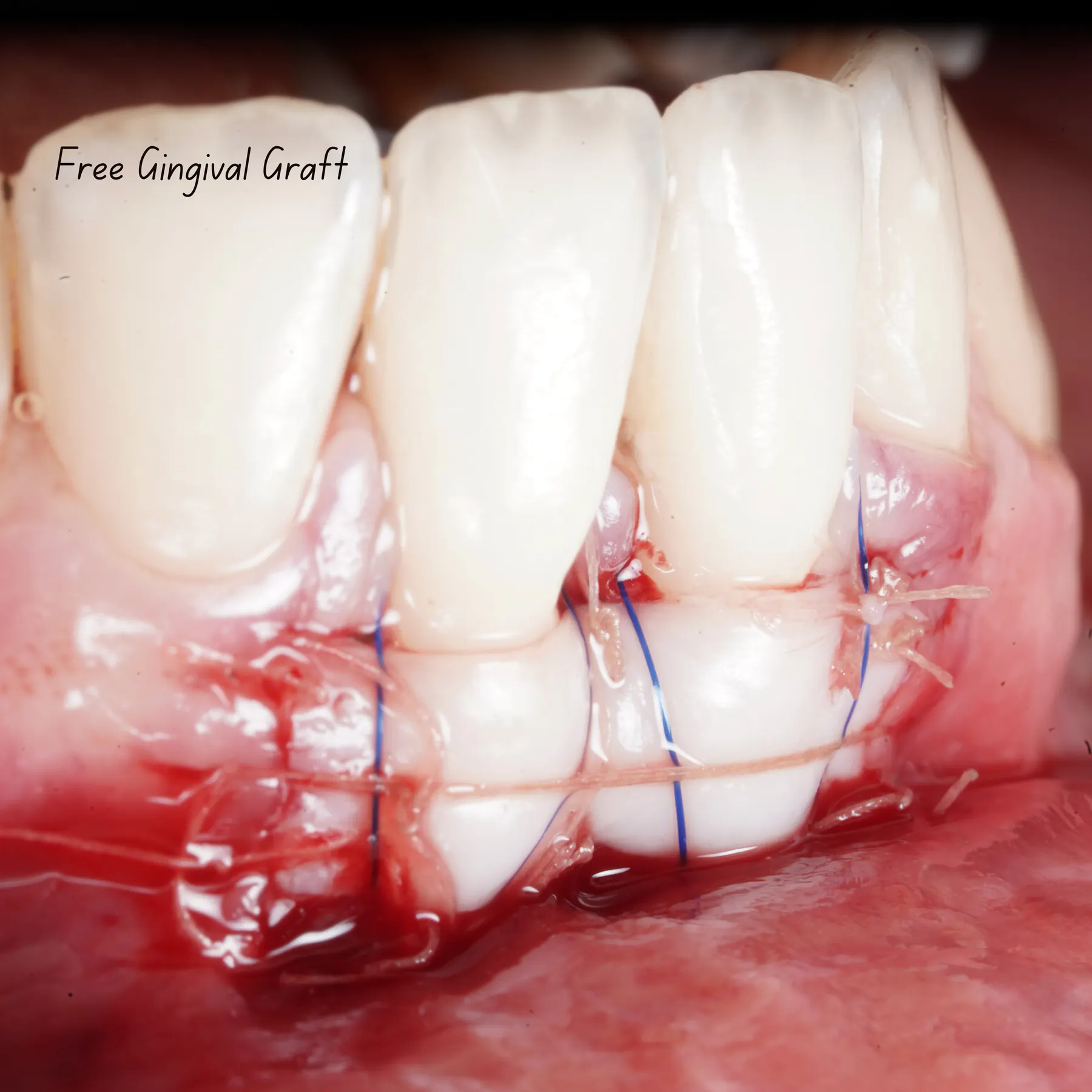
Free gingival graft · surgical view
The graft is shown with sutures in place. This photograph illustrates the procedure, not a healed result.
Different goals, different grafts
Adding thickness, increasing firmer gum tissue and covering an exposed root are different goals. The assessment determines which matters for you.
Looking specifically at gum recession?Tissue from beneath the surface of the palate can add thickness around teeth or implants. Around teeth, it may also be used with gum repositioning to cover exposed roots.
A surface layer of tissue from the palate can increase the band of firmer gum tissue. Its main purpose may be to support comfortable cleaning, rather than to cover the root.
A tissue substitute may be considered in suitable cases. We discuss the proposed material, its origin, expected benefit and limitations before treatment; it is not interchangeable with every graft technique.
When the concern is around an implant
Grafting may form part of a plan to improve tissue thickness or contour around an implant. The assessment also considers the implant position, the shape of the crown or bridge and access for cleaning.
A tissue graft alone may not address every concern. The plan may involve coordination with your restorative dentist or other treatment, depending on the findings.
More about implant tissue reconstruction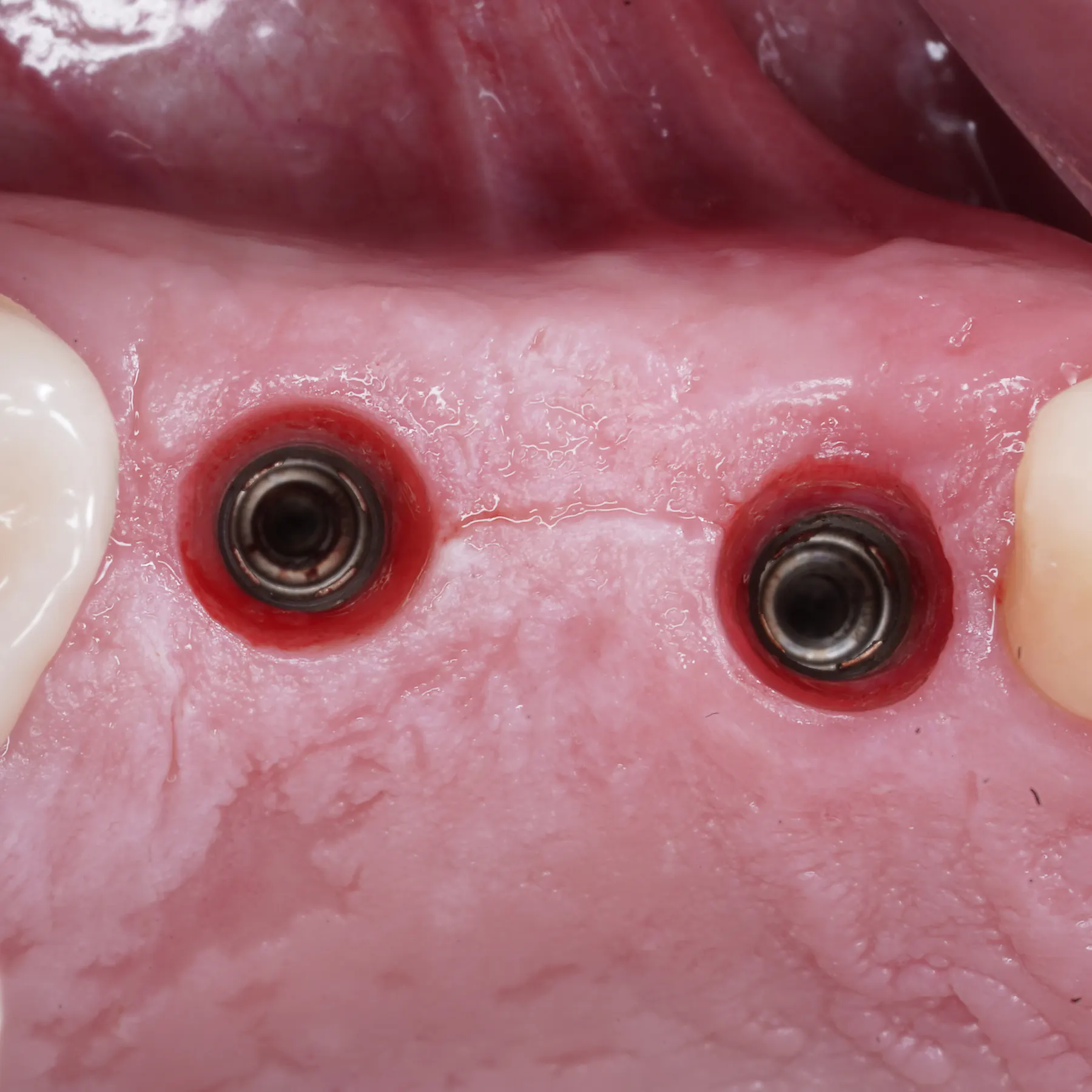
Tissue around two implant sites
A single clinical view from the case below, not a before-and-after comparison. Individual outcomes vary.
Read the implant tissue caseFrom your first enquiry
Describe your concern and whether it involves natural teeth, implants or both. Mention previous treatment and any plans to travel to Barcelona.
We assess tissue thickness, the band of firmer gum, cleaning access and the tooth or implant position. Photographs and other records are selected according to the findings.
Discuss whether the priority is thickness, comfort, contour or root coverage. Review alternatives, graft options, the treating clinician, fees and follow-up before deciding.
Private treatment is provided by Sahand and/or Sergi according to your plan. Follow-up is normally with our periodontist team; any coordination with your dentist is discussed in advance.
Planning beyond surgery
Grafting is usually performed with local anaesthetic. Soreness, swelling or bruising can occur, including at a donor site. Healing takes time and tissue maturation may continue for months.
Your team will explain how to care for the treated area and any donor site, including cleaning, eating, activity and review visits. Discuss work and travel plans before arranging treatment.
The graft may heal incompletely or fail, and root coverage is not always achievable. Tissue quality, the local anatomy, oral hygiene and smoking can affect the result.
Other risks include bleeding, infection and changes in gum contour. Further treatment may be needed. The relevant benefits, risks and alternatives should be discussed for your individual plan.
Your questions
Root coverage is one possible goal. A graft may instead aim to increase tissue thickness or the band of firmer gum. Your plan should explain which change is intended and what is realistically achievable.
Your own tissue may be recommended. Selected substitutes are another option for some cases, depending on the clinical goal. Ask about the proposed graft source, donor-site care and the limitations of each suitable option.
No. Implant position, the restoration and the condition of the surrounding tissues must be assessed together. Some concerns need changes to the restoration or other treatment as well as, or instead of, grafting.
Recovery depends on the procedure, the area treated and whether tissue is taken from a donor site. Your clinician will explain the expected stages and review visits. Discuss work, eating and travel arrangements before choosing a treatment date.
The assessed problem and proposed treatment determine the fee. We discuss the planned visits, what the fee includes and follow-up arrangements before you decide. This page does not offer a fixed treatment price.
Yes. Start with a brief enquiry and your travel context. The team can explain which records may be helpful and the next step for assessment. Confirm the clinical arrangements and follow-up before booking travel.
That separate patient programme is still being prepared and is not available to book. You can ask about the proposed model, but an enquiry does not reserve a place or confirm eligibility.
Start with a conversation
Let us know whether your concern is around a tooth or an implant. A brief enquiry is enough to begin; the team can explain the next step and which records may help.
An enquiry does not confirm an appointment or treatment suitability. Please contact us before booking travel.