Address contributing factors
Brushing trauma, inflammation, thin tissue and tooth position can contribute to recession. Understanding these factors is part of planning care.
Periodontal care · Barcelona
Gum recession can expose a tooth root and cause sensitivity or a change in your gum line. We assess your gums in Barcelona and explain whether root coverage, a gum graft or another approach is suitable for you.
Private care with Dr. Sahand Shirzadi Maryan and Dr. Sergi Rivas Frau, for patients in Barcelona and those visiting from abroad.
Appointments take place at collaborating dental clinics in Barcelona. The clinical location is confirmed when your visit is arranged.
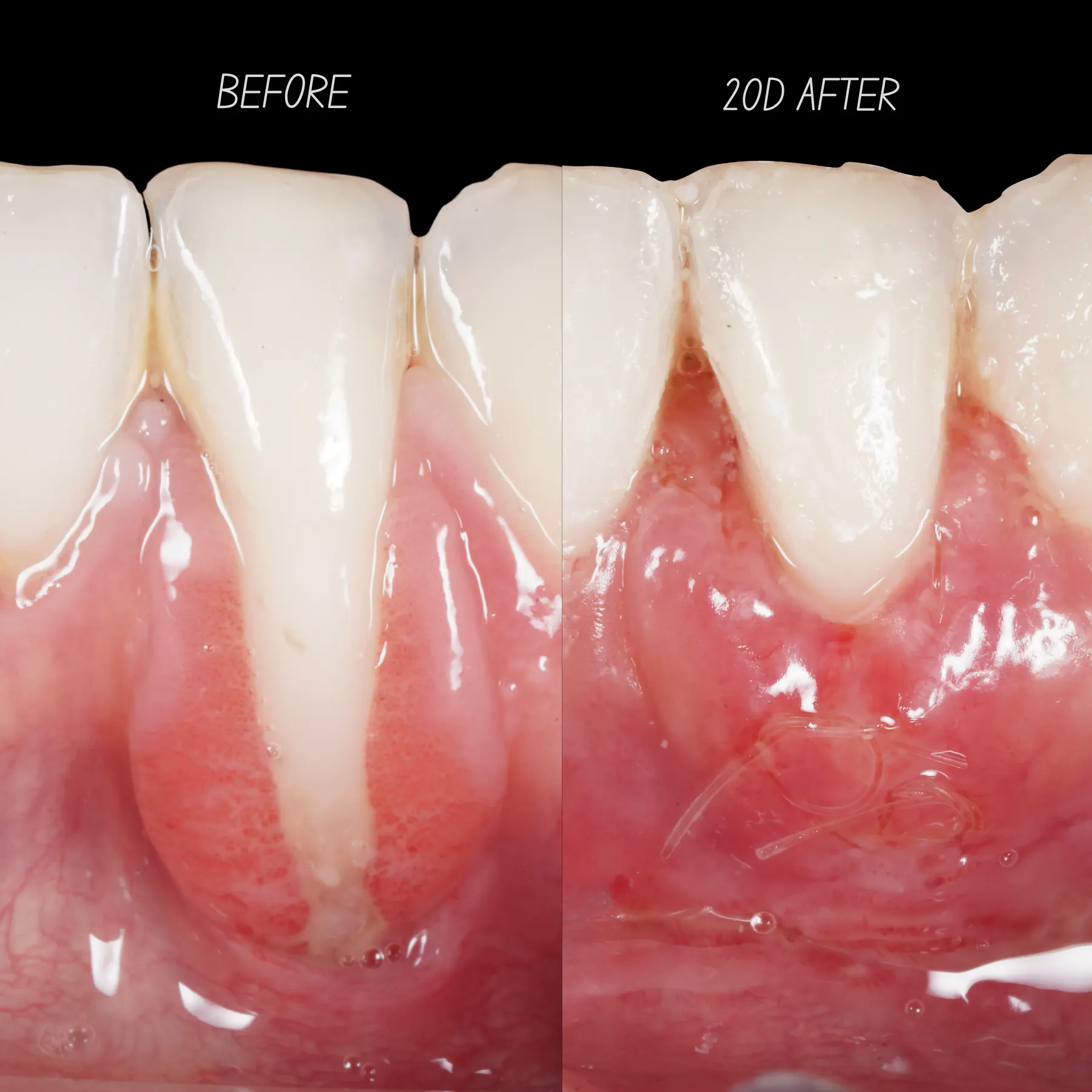
One case · before and at 20 days
An early healing view, not a final result. Individual outcomes vary.
Read this caseUnderstanding recession
Gum recession leaves part of a tooth root exposed. Treatment may aim to cover the root, strengthen the surrounding gum tissue or improve comfort and appearance.
Patient information: gum graft surgeryBrushing trauma, inflammation, thin tissue and tooth position can contribute to recession. Understanding these factors is part of planning care.
A gum-repositioning technique, sometimes combined with a connective tissue graft, may be considered for exposed roots. The approach depends on the recession and surrounding support.
Improving tissue thickness and covering a root are related but different goals. We discuss what the proposed treatment is intended to achieve and which alternatives apply to you.
From your first enquiry
Tell us about the exposed root, sensitivity or change in your gum line. Mention any previous treatment and whether you would be travelling to Barcelona.
An examination, periodontal measurements and photographs help assess the recession, tissue thickness and tooth position. Your clinician decides whether other records are needed.
Discuss the expected benefit, alternatives, limitations, clinician, fees and follow-up before deciding. If surgery is appropriate, the technique is chosen for the individual site.
Private treatment is provided by Sahand and/or Sergi according to the plan. Follow-up is normally with our periodontist team, with arrangements explained before treatment.
Planning beyond surgery
Grafting is usually performed with local anaesthetic. Soreness, swelling or bruising can follow, including at a donor site. Healing varies and tissue maturation can continue for months.
Your team will explain cleaning, eating, activity and review appointments for your procedure. Discuss work and travel plans before arranging surgery; a photograph of early healing does not set your recovery timetable.
Full root coverage is not always achievable. Your existing tooth support, tissue quality, habits and healing response affect the result.
Surgical risks include bleeding, infection, an uneven gum line and the possibility of further treatment. Your periodontist will discuss the risks relevant to your plan before you decide.
Your questions
The decision needs an assessment. Your symptoms, the tissue around the tooth and the factors contributing to recession all matter. We discuss whether surgery is appropriate and what alternatives should be considered.
Complete coverage cannot be promised. The type of recession, the support around the tooth, its position and tissue quality affect what is achievable. Your periodontist will explain the goal and limitations for your case.
A graft adds tissue to the area being treated, often using tissue from the palate. The gum may also be repositioned. The graft source and technique depend on the defect and are discussed before surgery; not every graft is intended to achieve the same result.
The fee depends on the assessed problem and proposed treatment. Before deciding, ask for the planned fee, what it includes and the follow-up arrangements. We do not give a fixed price without understanding the case.
Yes, you can enquire from abroad. Contact the team before booking flights or accommodation so assessment, treatment and follow-up visits can be discussed. An online enquiry does not confirm suitability or an appointment.
The supervised patient programme is still in preparation and is not bookable. It is separate from private care. You can read about the proposed model or ask a question, but an enquiry does not reserve a place.
Start with a conversation
A brief enquiry is enough to begin. Our team can explain the next step for an assessment and which records may be useful.
An enquiry does not confirm an appointment or treatment suitability. Please contact us before booking travel.