The intended benefit
A site planned for replacement
Preservation may help retain ridge dimensions when a future implant is planned. The expected benefit depends on the socket walls, tissue condition and the position needed for the replacement tooth.
Ridge preservation · Barcelona
When a tooth needs to be removed, the bone and gum around it change as the socket heals. Ridge preservation may help limit the loss of bone volume while you prepare for future tooth replacement.
Private care with Dr. Sahand Shirzadi Maryan and/or Dr. Sergi Rivas Frau, according to your treatment plan.
Appointments take place at collaborating dental clinics in Barcelona. The clinical location is confirmed when your visit is arranged.
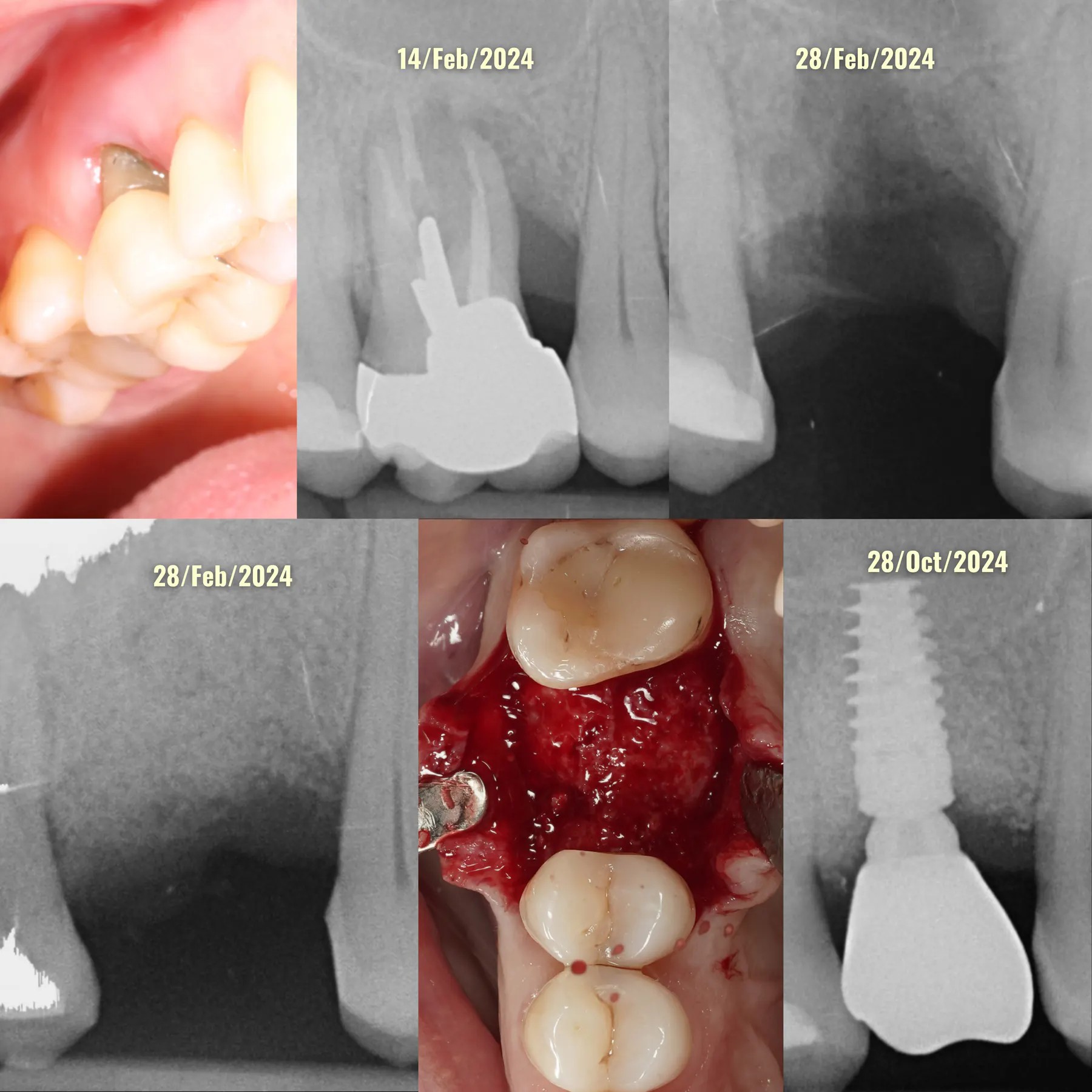
Extraction-site planning · clinical sequence
This composite includes clinical views and radiographs dated February and October 2024. The dates relate to this documented sequence; they are not a treatment timetable or a prediction of your result.
Understand the treatment stagesPreserving options after extraction
The ridge is the part of the jaw that supports the teeth. After extraction it can lose width and height. Socket or ridge preservation aims to reduce that loss, often using a graft within the socket and a protective covering.
The intended benefit
Preservation may help retain ridge dimensions when a future implant is planned. The expected benefit depends on the socket walls, tissue condition and the position needed for the replacement tooth.
The practical limit
Preservation cannot prevent every change after extraction. Missing bone walls or a larger defect may need more extensive reconstruction, either at extraction or during a later stage.
The plan should reflect how the space will be managed. An implant, a bridge, a removable denture or accepting the space can involve different considerations; grafting is not automatic simply because a tooth is removed.
The sequence matters
The tooth is removed with attention to the remaining tissues. The socket is assessed and managed, with graft material and a membrane or other covering used when indicated.
The surface gum and the underlying grafted site heal differently. A closed-looking socket does not confirm that the area is ready for an implant. Temporary teeth, if needed, must protect the healing site.
Examination and appropriate imaging guide the next stage. If implant treatment remains suitable, placement is planned around the available bone and future tooth; the final crown or bridge is a separate restorative step.
From your first enquiry
We first review whether the tooth can be maintained. If extraction is appropriate, the examination and relevant imaging help assess the socket, gum tissue and options for replacing the tooth.
Discuss whether to let the socket heal without a graft, preserve the ridge or consider immediate implant placement. The future tooth position, your priorities and the condition of the site guide the decision.
Private surgery is provided by Sahand and/or Sergi according to your plan. After extraction, the socket is assessed directly. If preservation is indicated, the graft and any covering are selected to suit the defect.
Follow-up is normally with our periodontist team. The healed site is reassessed before implant placement; additional grafting may still be needed. Agree who will provide temporary and final teeth and ongoing care.
Protecting healing
Soreness, swelling and some bleeding can follow extraction and grafting. Follow the treating team’s instructions for cleaning, eating and protecting the socket. Contact them for worsening pain or swelling, persistent bleeding, fever or concerns about the graft or covering.
Before choosing a date, discuss work, exercise, travel and planned reviews. Ask for written aftercare instructions and a contact route for concerns during recovery.
Risks include infection, delayed healing, exposure or loss of graft material and incomplete bone formation. The ridge may still shrink, and further grafting or a different replacement plan may be necessary. Implant placement is not guaranteed by socket preservation.
Smoking, infection, tissue condition and medical factors can affect healing. Tell the team about your medicines and health history, and agree the review schedule before surgery. The next stage is guided by reassessment of the site.
Your questions
No. The need depends on the socket, the surrounding tissues, the future replacement plan and your preferences. Some sites can heal without grafting. Ask what benefit preservation is expected to offer in your particular case.
No. Ridge preservation manages the extraction socket while the site heals, usually with a later implant decision. Immediate placement means inserting the implant during the extraction visit. They involve different treatment sequences; grafting may also be used around an immediate implant.
No. The ridge changes after a tooth is removed. Preservation aims to limit those changes, but it does not keep the site exactly as it was or guarantee enough bone for a future implant without further grafting.
That should be considered before extraction. Depending on the diagnosis, periodontal, root canal or restorative care may be appropriate. Ask why removal is being recommended and whether a tooth-preserving option remains realistic.
Infection and the size and shape of any bone defect affect the plan. The site needs assessment and appropriate management; a more extensive defect may require a different reconstruction approach. A routine socket graft is not the answer to every extraction site.
The choice depends on the defect and the proposed treatment. Ask about the material’s source, why it is recommended and whether a membrane or other covering will be used. Mention preferences about human, animal or synthetic materials before agreeing to treatment.
There is no single schedule for every site. Healing, the tissues present and the planned restoration determine the sequence. Implant placement and the final crown are separate stages; ask for an individual plan including a temporary tooth if needed.
You can still have an assessment for replacement. Classic socket preservation is planned around extraction; once the site has healed, the remaining ridge is assessed and any grafting is planned according to the current defect.
Ask whether the estimate includes extraction, graft and membrane, reviews, implants, temporary and final teeth, and any further grafting. Agree the sequence and follow-up with the team before booking travel; an enquiry cannot confirm suitability or treatment dates.
The separate programme is still in preparation and is not available to book. Its intended operators are qualified dentists undertaking further clinical training with OsteoPerio, with both Sahand and Sergi present during surgery. Eligibility for ridge preservation has not been confirmed.
For patients in Barcelona and abroad
Tell us which tooth is affected, whether extraction has been advised or already performed, and how you hope to replace it. The team can explain which records may help with assessment. Acute pain or swelling needs prompt dental care.
An enquiry does not confirm an appointment or treatment suitability. Please contact us before booking travel.