Selected defects
Grafting at implant placement
When the existing bone can support the planned implant, additional grafting may be performed during the same procedure. Suitability depends on the defect and clinical findings.
Bone regeneration · Barcelona
Bone grafting or guided bone regeneration may be considered when there is not enough bone for a planned dental implant. In Barcelona, we assess your bone, gums and proposed replacement tooth to explain whether grafting is needed and whether it can be combined with implant placement or needs a separate stage.
Concerned about bone loss around teeth you still have? Start with a periodontal assessment.
Private care with Dr. Sahand Shirzadi Maryan and/or Dr. Sergi Rivas Frau, according to your treatment plan.
Appointments take place at collaborating dental clinics in Barcelona. The clinical location is confirmed when your visit is arranged.
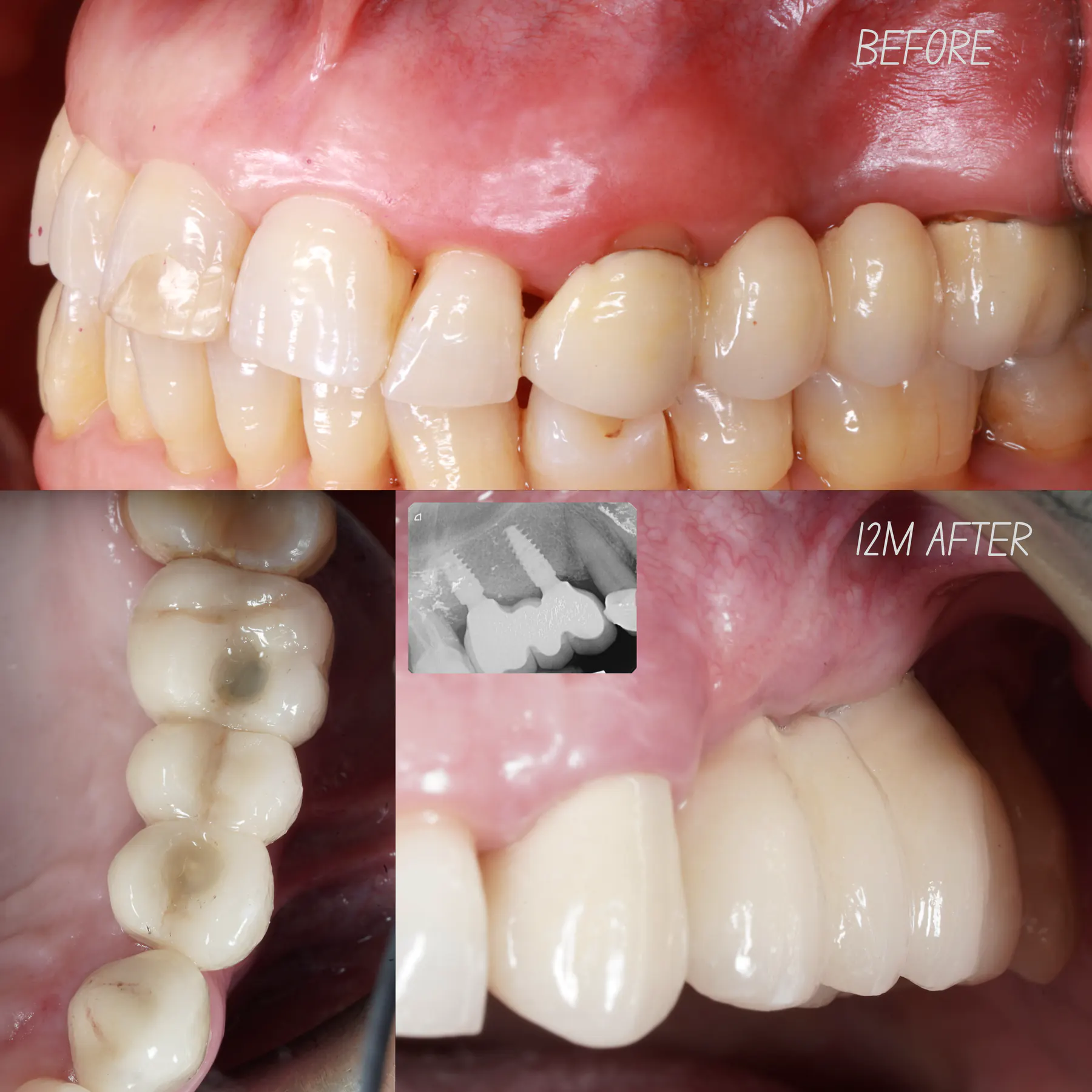
Clinical case · before and later review
Clinical photographs and an implant radiograph, labelled “Before” and “12M After”. The timing refers to this case’s review. Individual outcomes and healing times vary.
Read the regeneration caseThe sequence matters
Bone regeneration aims to improve the implant foundation. The amount of missing bone and the planned implant position help determine whether treatment can be combined or needs separate stages.
Selected defects
When the existing bone can support the planned implant, additional grafting may be performed during the same procedure. Suitability depends on the defect and clinical findings.
A staged approach
When more reconstruction is needed, the graft is allowed to heal before reassessment for an implant. The next stage depends on the bone achieved and the condition of the tissues.
Ask about alternatives too. Depending on your situation, a different implant plan, a bridge, a removable denture or leaving the space may be considered. An assessment does not commit you to surgery.
NHS patient guide: implants and bone supportUnderstand what is proposed
Bone grafting is a broad term for procedures that aim to rebuild missing bone. Guided bone regeneration, or GBR, is one approach in which graft material is commonly combined with a barrier membrane to protect the regenerative space during healing.
The material, membrane and technique are chosen for the defect. Share any concerns about material origin early so that suitable options can be discussed.
NHS patient guide: bone grafting optionsOptions can include your own bone, processed human donor material, animal-derived substitutes or synthetic materials. Combinations may be used. If your own bone is proposed, discuss the donor site and its care.
Some membranes break down over time; others need removal. Ask what is planned, whether fixation is needed and how this affects later visits.
From your first enquiry
We review your concern, medical history, previous treatment and gum health. Examination and appropriate imaging, including CBCT when indicated, help define the defect and nearby anatomy.
The proposed restoration helps define where the implant would need support. We assess bone width and height, soft tissue and whether infection needs treatment first.
Discuss the proposed graft, alternatives, limitations and treatment sequence. The plan should identify the treating clinician, fees, temporary tooth arrangements and who provides the final restoration.
Private surgery is provided by Sahand and/or Sergi according to your plan. Follow-up is normally with our periodontist team, with implant timing reviewed against healing rather than a fixed travel deadline.
Allow time for healing
Soreness, swelling and bruising can occur. Your clinician gives instructions for cleaning, eating, activity and review visits, including donor-site care if needed. Bone maturation takes longer than the initial gum healing.
Discuss work, temporary teeth and travel before choosing a date. Confirm how to contact the treating team if you have concerns during recovery.
Risks include infection, wound opening or graft exposure, bleeding and incomplete regeneration. Site-specific risks can include altered sensation or sinus complications. Smoking and health factors may affect healing.
A graft may not create enough bone for the intended implant. Further treatment, graft removal or a different tooth-replacement plan may be needed. Your surgeon explains the relevant risks and alternatives.
Your questions
No. The assessment considers the amount and shape of the existing bone in relation to the proposed implant and tooth. Grafting is considered when additional support is needed; it is not a routine requirement for every patient.
Sometimes. Selected defects can be managed at implant placement; others need grafting first and a later reassessment. We explain which sequence is proposed and what could change it.
Guided bone regeneration, often shortened to GBR, uses a barrier membrane to protect the space where bone is intended to form, usually alongside graft material. It is different from the surgical guide used to position an implant.
Yes. Tell us about any preferences or concerns early. Ask which graft and membrane are proposed, where they come from, whether a donor site is needed and what suitable alternatives exist.
Graft healing, implant placement and the final tooth are separate parts of the plan. The extent of grafting and your healing affect the sequence. We discuss an estimated schedule and review it after treatment; the case image on this page is not a timetable for your care.
A new assessment can review the previous treatment and current condition. Tell us what was done and which records you have. The team can explain what would be useful to review; further grafting is not automatically the right option.
Ask about scans, grafting, materials, any later membrane removal, implant surgery, temporary and final teeth, and review visits. Your individual plan should make clear which stages are included and which are quoted separately.
Yes. Start with a brief enquiry and your travel context. Agree the treatment stages, review visits and follow-up with the team before booking travel. Healing may require more than one visit to Barcelona.
The separate supervised patient programme is still in preparation and is not available to book. It is intended for qualified dentists undertaking further clinical training with OsteoPerio, with both Sahand and Sergi present during surgery. An enquiry does not reserve a place.
For patients in Barcelona and abroad
Tell us briefly what you have been advised and whether you have had previous grafting or implant treatment. The team can explain the next assessment step and which records may help.
An enquiry does not confirm an appointment or treatment suitability. Please contact us before booking travel.