Bone & implant position
Support in the right place
We assess the socket walls and the bone available to stabilise the implant. The future tooth guides the position; simply filling the space left by the root is not the treatment goal.
Immediate implant placement · Barcelona
For a tooth that cannot be saved, implant placement at the same visit as extraction may be an option. We assess the bone, gum tissue and planned tooth position before recommending an immediate or staged approach.
Private care with Dr. Sergi Rivas Frau and/or Dr. Sahand Shirzadi Maryan, according to your treatment plan.
Appointments take place at collaborating dental clinics in Barcelona. The clinical location is confirmed when your visit is arranged.
The implant supports the tooth. The tissues support the plan.
Original educational illustration · not to scale. The threaded implant lies in bone; a smooth connection passes through the gum to the crown. This is a possible later configuration, not a same-day result.
Explore the illustrated stagesYour treatment, step by step
Follow one illustrative pathway from assessment to a restored implant. Each step depends on the findings. Your plan may include healing first, grafting or a different temporary tooth.
Stage 1 of 6
Examination and appropriate imaging help explain the problem, the surrounding tissues and the replacement options. Extraction is considered after discussing realistic ways of keeping the tooth.
The treatment plan starts with your diagnosis and priorities, before a procedure is selected.
A bone-level implant design is illustrated. The smooth component through the gum is separate from the threaded implant body. The temporary and definitive crown panels represent different treatment stages, not two restorations delivered at the same visit.
An agreed alternative
If the site cannot support the planned immediate approach, the sequence changes. The socket may be managed, with grafting when appropriate, and reviewed before later implant placement. If an implant can be placed but cannot support a temporary crown safely, it may instead be allowed to heal without that crown.
A documented clinical example
The educational drawings explain the principles. The photographs show the existing orthodontic and implant case, with its own treatment sequence and limitations. They are not a reconstruction of the illustrated pathway.
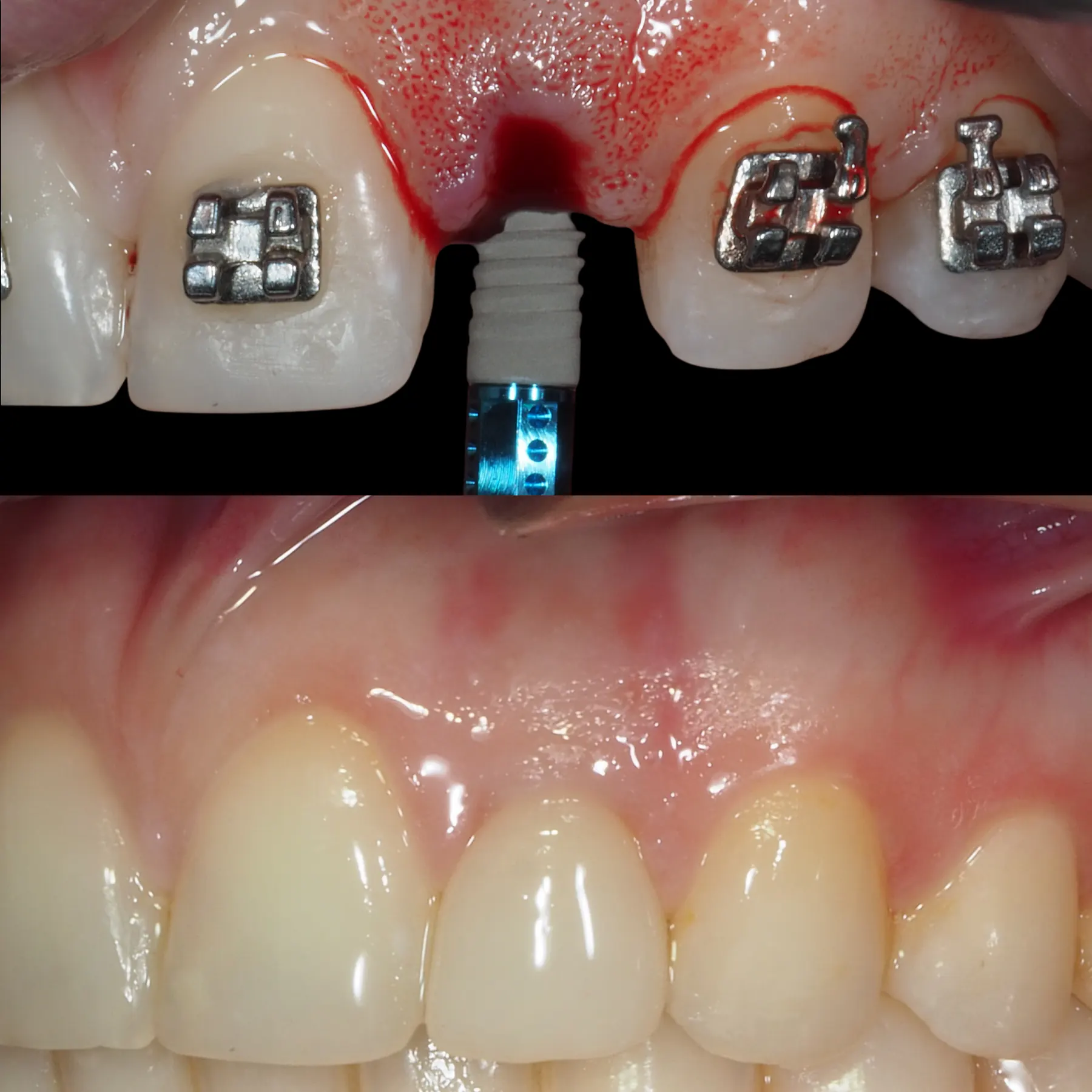
From implant placement to restoration
This case combined orthodontic preparation, implant placement and soft tissue care. The photographs show different stages of treatment, not a same-day final result. Individual outcomes vary.
Explore this implant caseThese original educational diagrams reflect principles described in the 2023 ITI consensus and EAO position paper. The references concern selected immediate-implant situations, particularly the front and premolar region; they do not establish suitability or predict an individual result.
Selection before speed
Immediate placement means inserting the implant into the socket at the extraction appointment. Suitability depends on the tissues and the ability to place a stable implant in the position needed for the future tooth.
Bone & implant position
We assess the socket walls and the bone available to stabilise the implant. The future tooth guides the position; simply filling the space left by the root is not the treatment goal.
Gums & smile
Gum thickness, existing recession and the smile line affect planning, particularly at the front of the mouth. Bone or soft tissue grafting may still be needed with immediate placement.
Immediate treatment is one option. If the site needs healing first, early or delayed implant placement may be proposed. A bridge, removable denture or accepting the space may also be alternatives.
The sequence matters
An implant can sometimes be inserted immediately after extraction. This decision depends on the site, infection control, the intended position and the stability achieved during surgery.
A temporary crown on the implant is considered separately. If suitable, it may need protection from biting forces. Otherwise, another temporary-tooth option is agreed while the site heals.
The definitive crown or bridge is a later restorative stage, guided by healing and tissue stability. Immediate placement does not promise an immediate final tooth or unrestricted chewing.
From your first enquiry
Before planning extraction, we assess the tooth and discuss any realistic tooth-preserving options. If it cannot be maintained, your priorities and the replacement options guide the next steps.
Examination and appropriate imaging, including CBCT when indicated, help assess bone, gum tissue and the proposed tooth position. Agree a temporary-tooth option and a fallback plan before extraction.
Private surgery is provided by Sergi and/or Sahand according to your plan. The extraction socket and achievable implant stability are checked; findings may favour grafting and later implant placement.
Follow-up is normally with our periodontist team. The plan should identify who provides the final crown or bridge, the reviews needed before that stage and who will maintain the implant long term.
Protecting healing
Soreness, swelling, bruising and some bleeding can follow extraction and implant surgery. Follow your team’s instructions for cleaning, eating and protecting any temporary tooth. Contact the treating team for worsening symptoms, persistent bleeding, fever or a loose temporary tooth.
Before choosing a date, discuss work, exercise, travel and planned reviews. Ask for written aftercare instructions and a contact route for concerns during recovery.
Risks include infection, failure of the implant to integrate with bone and changes in the gum contour. Recession or loss of tissue volume can affect appearance, particularly around a front tooth. Additional grafting or further treatment may be needed.
Smoking, gum disease, medical factors and bite forces can affect planning and healing. Implant care continues after the final tooth is fitted: cleaning and maintenance reviews remain important. Discuss your individual risks and the alternatives if the implant cannot be retained.
Your questions
No. Immediate placement refers to the implant being inserted at the extraction visit. Whether a temporary tooth can be attached to that implant is a separate decision. The final crown is normally planned after healing and assessment of the gum contour.
That should be assessed before deciding on extraction. Depending on the problem, periodontal, root canal or restorative treatment may be worth considering. An implant plan should follow a clear explanation of why the tooth cannot be predictably maintained.
The nature and extent of infection, the socket walls, available bone and your health all need assessment. Infection does not lead to the same decision in every case. The team may recommend treating the site and allowing healing before placing an implant.
Discuss this before extraction. A fallback may involve cleaning the socket, grafting when indicated and allowing healing before implant placement. Agree how your temporary tooth, visits and fees would change if a staged approach is needed.
Possibly. Placing an implant immediately does not remove the need to assess bone and gum support. Grafting may be proposed to manage a gap or tissue deficiency; the material, donor site if applicable and additional healing needs should be explained.
It may be an option in selected cases, but front teeth need careful assessment of the smile line, gum thickness, bone and final tooth position. Sometimes orthodontic preparation or a staged approach is more appropriate. The appearance cannot be guaranteed.
Discuss this before extraction. Depending on your bite and the site, a temporary removable tooth, a tooth-supported option or an implant-supported temporary crown may be considered. The agreed option should protect the healing area.
Ask for a written sequence covering extraction, any grafting, implant placement, temporary and final teeth and follow-up. Clarify what each fee includes and how a change to staged treatment would affect the plan. Confirm visits with the team before booking travel.
The separate programme is still in preparation and is not available to book. Its intended operators are qualified dentists undertaking further clinical training with OsteoPerio, with both Sergi and Sahand present during surgery. Eligibility for immediate implant treatment has not been confirmed.
For patients in Barcelona and abroad
Tell us which tooth is affected, what you have been advised and whether extraction is already planned. The team can explain which records may help assess your options. If you have acute pain or swelling, seek prompt dental care rather than waiting for an online assessment.
An enquiry does not confirm an appointment or treatment suitability. Please contact us before booking travel.