The reconstruction question
How much height and width are missing? Where would the implant need to sit? Bone, nearby anatomy and gum tissue are assessed together before proposing a graft.
Vertical ridge augmentation · Barcelona
When the jaw ridge has lost height, implant planning can become more complex. We assess whether vertical regeneration could help and explain the alternatives, surgical stages and follow-up before you decide.
Private care with Dr. Sergi Rivas Frau and/or Dr. Sahand Shirzadi Maryan, according to your treatment plan.
Appointments take place at collaborating dental clinics in Barcelona. The clinical location is confirmed when your visit is arranged.
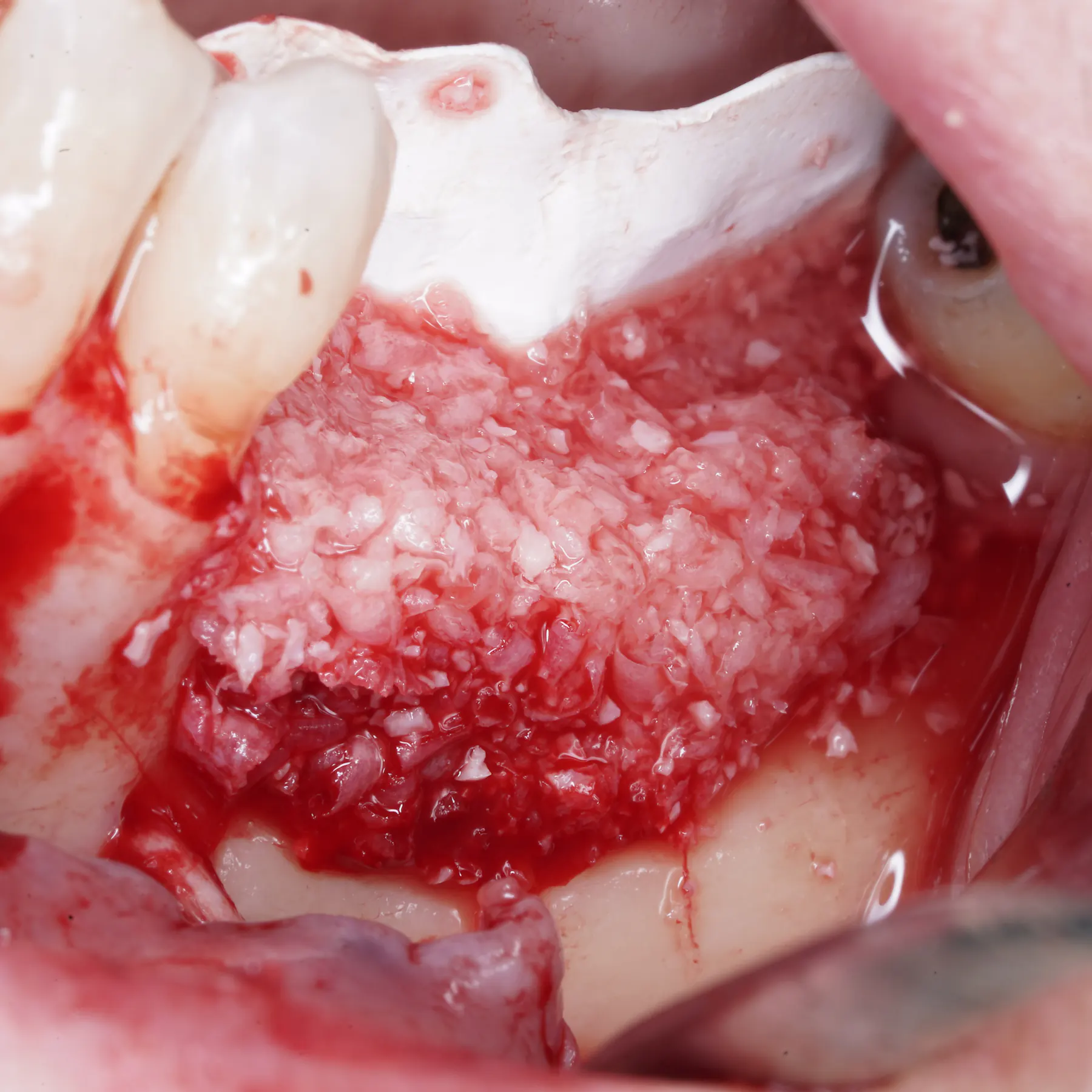
Vertical regeneration · surgical view
Graft material and a membrane are visible during reconstruction. This photograph shows a surgical stage, not healed bone or a measured gain in height. Individual outcomes vary.
Explore a vertical regeneration caseWhen the jaw ridge has lost height
Vertical regeneration aims to rebuild bone height for a proposed implant. It is a demanding procedure: the assessment considers whether the expected benefit justifies the surgery, healing period and risk of complications.
How much height and width are missing? Where would the implant need to sit? Bone, nearby anatomy and gum tissue are assessed together before proposing a graft.
Depending on the findings, a different implant plan, a bridge, a removable denture or accepting the space may be considered. The treatment decision should reflect your priorities as well as the anatomy.
Building and protecting the grafted area
Your own bone and selected substitute materials may be used, depending on the defect. Discuss their origin, any donor site and the reasons for the proposed combination.
A reinforced membrane may help maintain the intended space. Its fixation and any later removal form part of the surgical plan; no single material is right for every reconstruction.
The tissues need to cover and protect the graft. Their condition, careful closure and the ability to attend follow-up are important parts of planning.
From your first enquiry
Discuss previous tooth or implant loss, grafting, your health and your expectations. Examination and appropriate imaging, including CBCT when indicated, help assess bone height, width and nearby structures.
The future tooth and implant position guide the assessment. We discuss the proposed technique, alternatives, graft source, membrane and the condition of the gum tissue needed for closure.
Private surgery is provided by Sergi and/or Sahand according to your plan. Before proceeding, clarify temporary teeth, fees, review visits and whether later membrane or fixation removal is expected.
Healing and the bone achieved determine the next step. Follow-up is normally with our periodontist team; the plan also identifies who provides the final restoration and ongoing care.
Allow time for healing
Soreness, swelling and bruising can follow surgery, including at a donor site. Your team explains cleaning, eating, activity and review visits. The gum can look healed while the grafted area still needs time to mature.
Discuss work, temporary teeth and travel before choosing a date. Confirm how to contact the treating team if you have concerns during recovery.
Vertical reconstruction carries a risk of wound opening, membrane or graft exposure, infection and incomplete regeneration. Bleeding, altered sensation and other site-specific risks also need discussion. Smoking, gum health and medical factors can affect healing.
The achieved height may fall short of the plan. An exposed or infected graft may need treatment or removal, and additional grafting or another tooth-replacement approach may be needed. Implant placement is not guaranteed after regeneration.
Your questions
Vertical regeneration aims to increase the height of the jaw ridge. Other grafting may mainly increase its width or treat a smaller local defect. Some patients need both height and width addressed, and the complexity depends on the anatomy.
A different implant plan may be an option in selected cases, but available bone, nearby anatomy, the bite and the proposed restoration all matter. Ask which alternatives are realistic for you and what their limitations are.
No. A sinus lift creates space beneath the sinus lining in the back of the upper jaw. Vertical ridge regeneration rebuilds the jaw ridge itself. The assessment determines which problem is present and which approach may help.
Vertical reconstruction often involves grafting first, followed by healing and reassessment before implant placement. Your clinician explains the proposed sequence and whether combining stages is appropriate in your case.
That depends on the technique and material. Some membranes break down over time; others require a later procedure. Ask whether membrane or fixation removal is planned and which visits and costs it involves.
There is no single figure that applies to every defect. The achievable height depends on anatomy, technique and healing. We discuss the intended goal after assessment; further treatment or a different implant plan may still be necessary.
Previous failure needs careful review of the cause and current tissues. Tell us what treatment you have had and which records are available. A further graft is not automatically the next step.
Ask for a plan covering assessment, grafting, materials, any removal procedure, implants, temporary and final teeth, and follow-up. Clarify what is included in each fee and agree visits with the team before booking travel. An enquiry cannot confirm a healing schedule.
The separate supervised programme is still in preparation and is not available to book. Its intended operators are qualified dentists undertaking further clinical training with OsteoPerio, with both Sergi and Sahand present during surgery. Eligibility has not been confirmed for this treatment.
For patients in Barcelona and abroad
Tell us what you have been advised about bone height and whether you have had previous grafting or implant loss. A brief enquiry is enough to begin; the team can explain which records may help with assessment.
An enquiry does not confirm an appointment or treatment suitability. Please contact us before booking travel.