The clinical concern
Deep gum recession left a root surface exposed. The case involved thin gum tissue and a tooth positioned towards the outside, with concern about its long-term support.
Clinical case · Recession Coverage
Root coverage surgery with a connective tissue graft was followed by Invisalign treatment to move the tooth inward. See the initial three-dimensional assessment, the 20-day comparison, three-month photographs and records from the start of orthodontic care.
Surgery performed by Dr. Sahand Shirzadi Maryan and Dr. Sergi Rivas Frau.
One patient’s treatment sequence. Suitability and healing vary; your own options require an assessment.
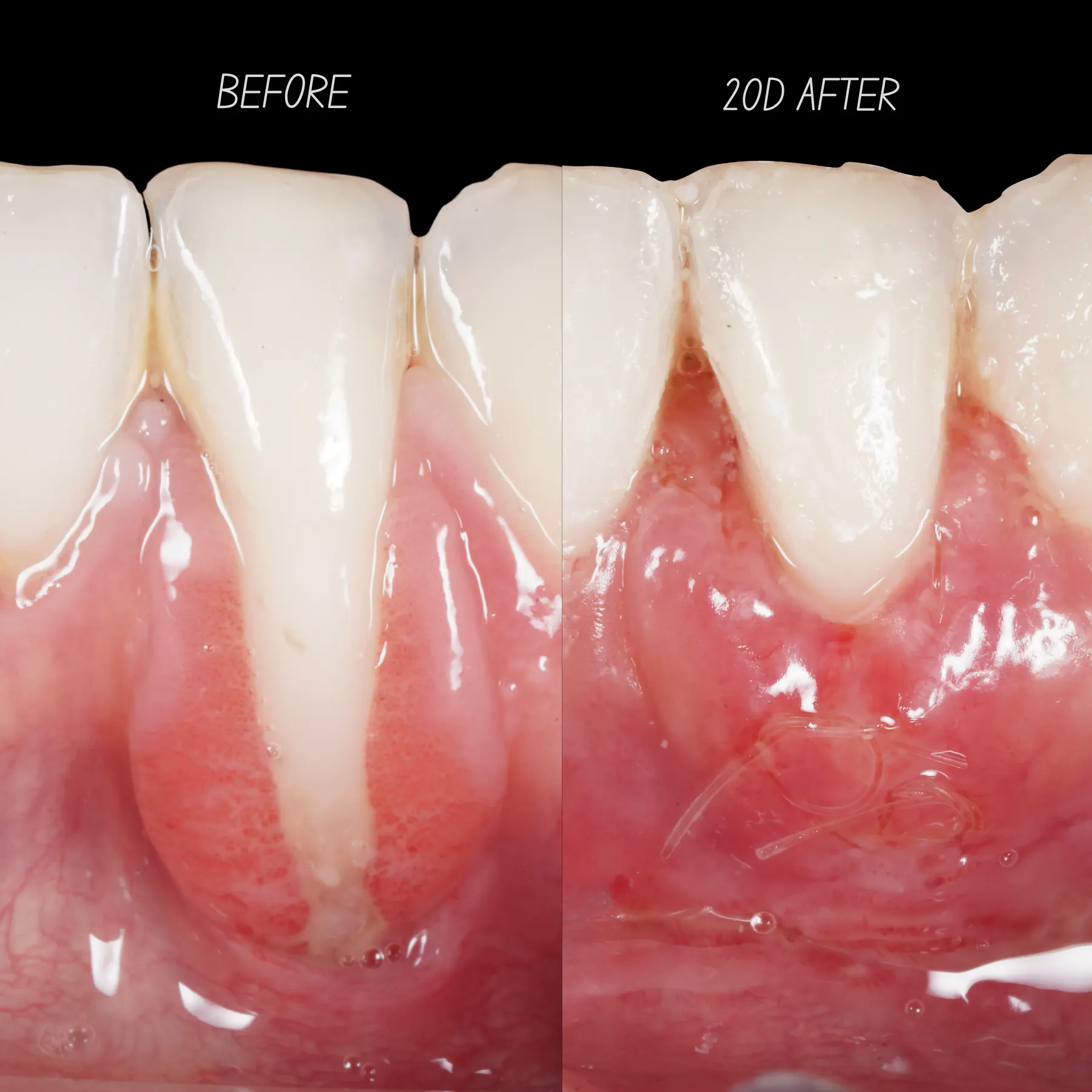
Before treatment / 20 days after
The complete clinical comparison is shown with its original time labels. The right-hand image records early healing; it does not establish the final result or long-term stability.
View full-size image (opens in a new tab)The starting point
Deep gum recession left a root surface exposed. The case involved thin gum tissue and a tooth positioned towards the outside, with concern about its long-term support.
Clinical photographs, periodontal measurements, tissue assessment and radiographic review informed the plan. Treatment considered both the gum tissue and the outward position of the tooth.
Initial records
In this case, the clinical photograph and three-dimensional imaging helped the team consider the tooth’s outward position alongside the gum recession. These records informed the periodontal and orthodontic plan.
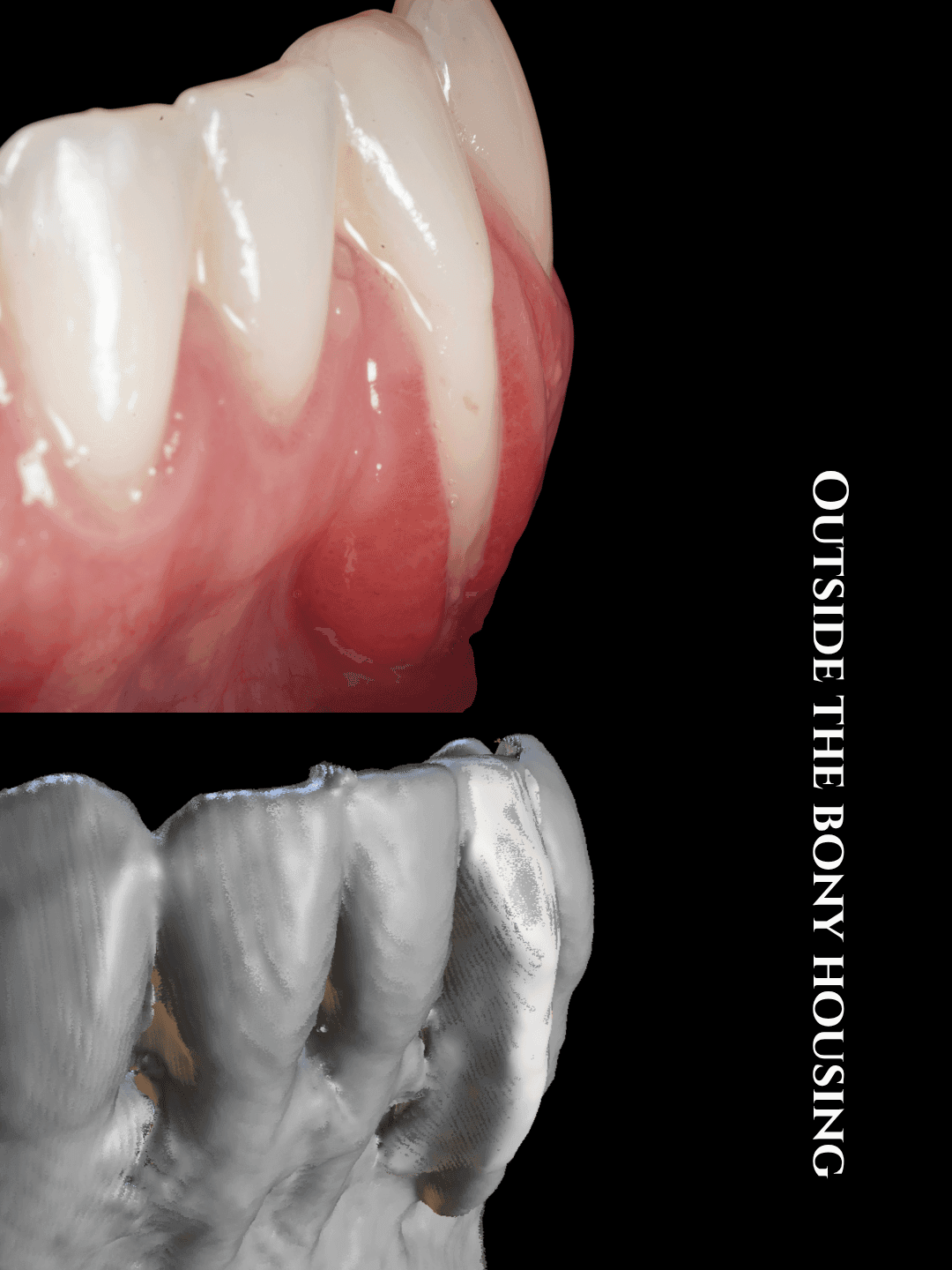
Before treatment · clinical and 3D assessment
The clinical photograph and CBCT-based 3D view were used to assess the tooth’s position in relation to the surrounding bone before treatment.
View full-size image (opens in a new tab)Understanding the treatment
The visible root was one part of the problem. This plan also considered the thin tissue and the tooth’s outward position. The illustrations explain why surgery and later orthodontics had different jobs to do.
When the gum margin moves down the root of a lower tooth, more root surface becomes exposed. In this case, the tissue was thin and the tooth sat towards the outside of the dental arch.
What we assess
We look at the gum, the support around and between the teeth, and the tooth’s position. Together, these help us judge how much coverage may be possible.
A connective tissue graft is a small piece of tissue placed beneath the gum. Here, grafting and repositioning the gum aimed to reinforce the tissue and cover more of the exposed root.
Why healing matters
The graft needs a blood supply and protected healing. The team reviews the tissue as it matures; complete root coverage cannot be assumed.
After grafting, Invisalign treatment moved this tooth towards the tongue. This is called lingualisation. It addressed the outward tooth position as a further part of the treatment.
A different role
Orthodontics changes tooth position; the graft treats soft tissue. The order and timing are planned together, and not every recession case needs both treatments.
Educational diagrams, not to scale or a reconstruction of this patient’s anatomy. The first two views face the tooth; the third looks from the side. The graft is shown through the gum to explain its position. The dashed tooth is an illustrative starting position; the arrow shows direction, not the exact movement. Bone and neighbouring teeth are omitted. Gum coverage does not demonstrate bone regeneration.
Healing comes between the stages
Tooth movement followed grafting in this case. The periodontal and orthodontic plan determines when to begin, taking healing and tissue health into account. A 20-day photograph is an early review, not a timetable for starting orthodontics.
The clinical comparison shows the starting recession and early healing at 20 days. Additional records show the three-month tissue appearance and the start of Invisalign; a completed orthodontic result is not shown.
Follow this patient’s treatment stagesTreatment sequence
Each stage has a different purpose. The sequence below places the photographs in the wider course of assessment, treatment and follow-up.
Before treatment
The case description records a deep recession defect and thin gum tissue. Photographs, periodontal measurements and radiographic assessment informed the treatment plan.
Treatment planning
The aim was to improve coverage of the exposed root and reinforce the soft tissue. The starting anatomy and support around the tooth affect what can be achieved; full coverage cannot be assumed.
Surgery
A connective tissue graft was placed beneath the gum through a tunnel approach. The tissue was repositioned and stabilised with the aim of protecting the graft and supporting healing.
20-day review
The comparison shows the gum margin before treatment and the changed tissue contour at 20 days. This is an early review point in the healing process.
After grafting
Invisalign treatment followed the grafting procedure to move the tooth towards the tongue, a movement called lingualisation. This addressed tooth position as a further part of the treatment plan.
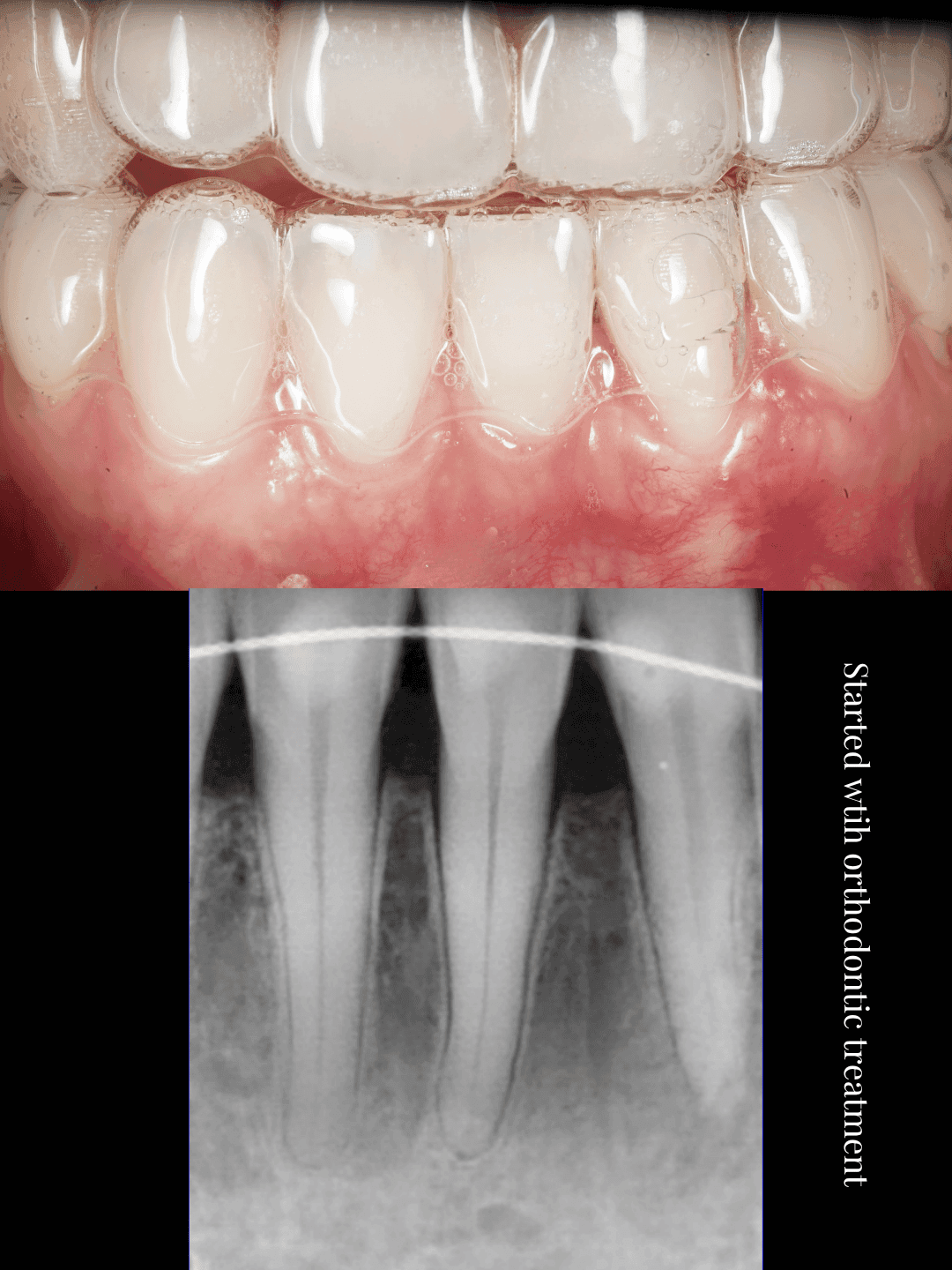
The start of Invisalign treatment
Above: the clinical photograph as Invisalign treatment began. Below: the periapical radiograph taken before Invisalign started. The two views document different moments around the start of orthodontic care.
View full-size image (opens in a new tab)3- and 6-month reviews
The three-month review is documented with frontal and side photographs below. A six-month review is also recorded in the case history, but photographs from that visit are not shown.
Three-month follow-up
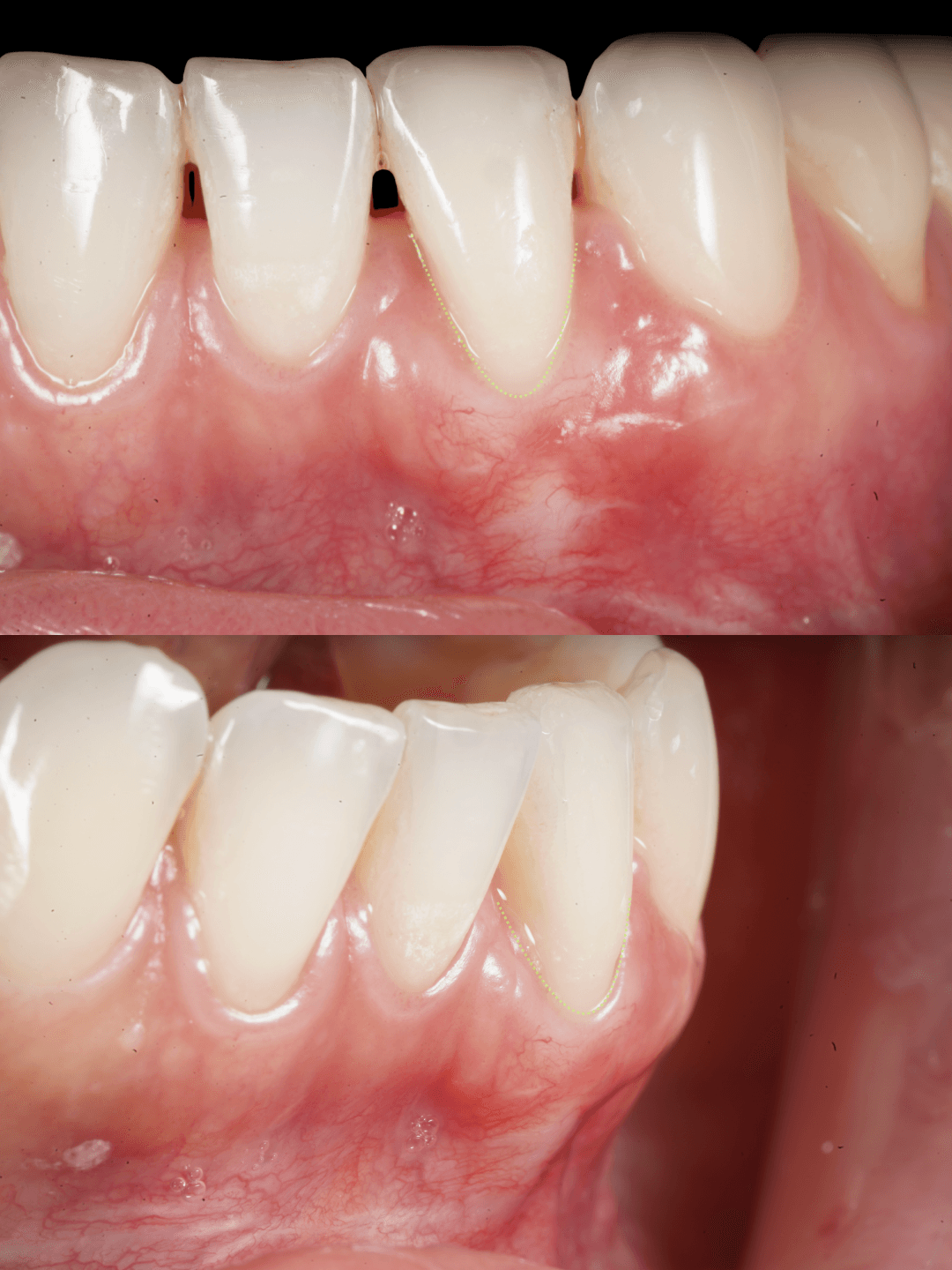
Three months after treatment
Frontal view above and side view below, three months after periodontal treatment. The original dotted annotations are retained. These are follow-up photographs, not the completed orthodontic result.
View full-size image (opens in a new tab)The frontal and side photographs show the gum appearance at the three-month review after periodontal treatment. They add a later view to the original before-treatment and 20-day comparison shown above.
Photographs alone cannot measure tissue thickness, bone support or symptom improvement. This comparison does not provide a root coverage percentage or demonstrate long-term tooth retention.
The Invisalign photograph records the start of orthodontic care; its accompanying periapical radiograph was taken before Invisalign began. A six-month review is reported but not pictured. The completed orthodontic result is not shown.
Your questions
No. These photographs document the tissue appearance at a three-month review after periodontal treatment. The aligner photograph records the start of Invisalign, and the periapical radiograph was taken before it began. The completed orthodontic result is not shown.
It is an early healing view. The tissue continues to change as it matures, and longer follow-up is needed to assess the gum margin and stability. A similar starting appearance does not mean another patient will have the same result.
That requires an examination. The pattern of recession, support between the teeth, tooth position, tissue condition and your priorities all affect the choice of treatment. An assessment may lead to grafting, a different approach or non-surgical care.
A change in the visible gum margin does not establish bone regeneration. This case describes soft tissue grafting, and the photographs should not be used to infer changes in the supporting bone.
In this case, orthodontic treatment was used after grafting to move the tooth inward, towards the tongue. It addressed tooth position alongside the soft tissue treatment. Orthodontics is not part of every recession treatment plan; its role and timing depend on the individual assessment.
Explore your options
Understand assessment, treatment choices and the limits of coverage.
Explore why tissue grafting may be considered and what it involves.
Ask about a proposed plan or a concern after previous treatment.
Tell us what concerns you. In the enquiry form, choose “Gum recession / root coverage” as your main concern. The team can explain the next step and which existing records may be useful.
Appointments take place at collaborating dental clinics in Barcelona. The clinical location is confirmed when your visit is arranged. For visits from abroad, agree the assessment arrangements before booking travel.
Individual results vary. Root coverage predictability depends on diagnosis, tissue phenotype, tooth position, habits, hygiene and healing response.