Observation, clinical case mentorship and focused workshops for qualified dentists in Barcelona. Prepare through scientific articles, theory and complex-case planning.
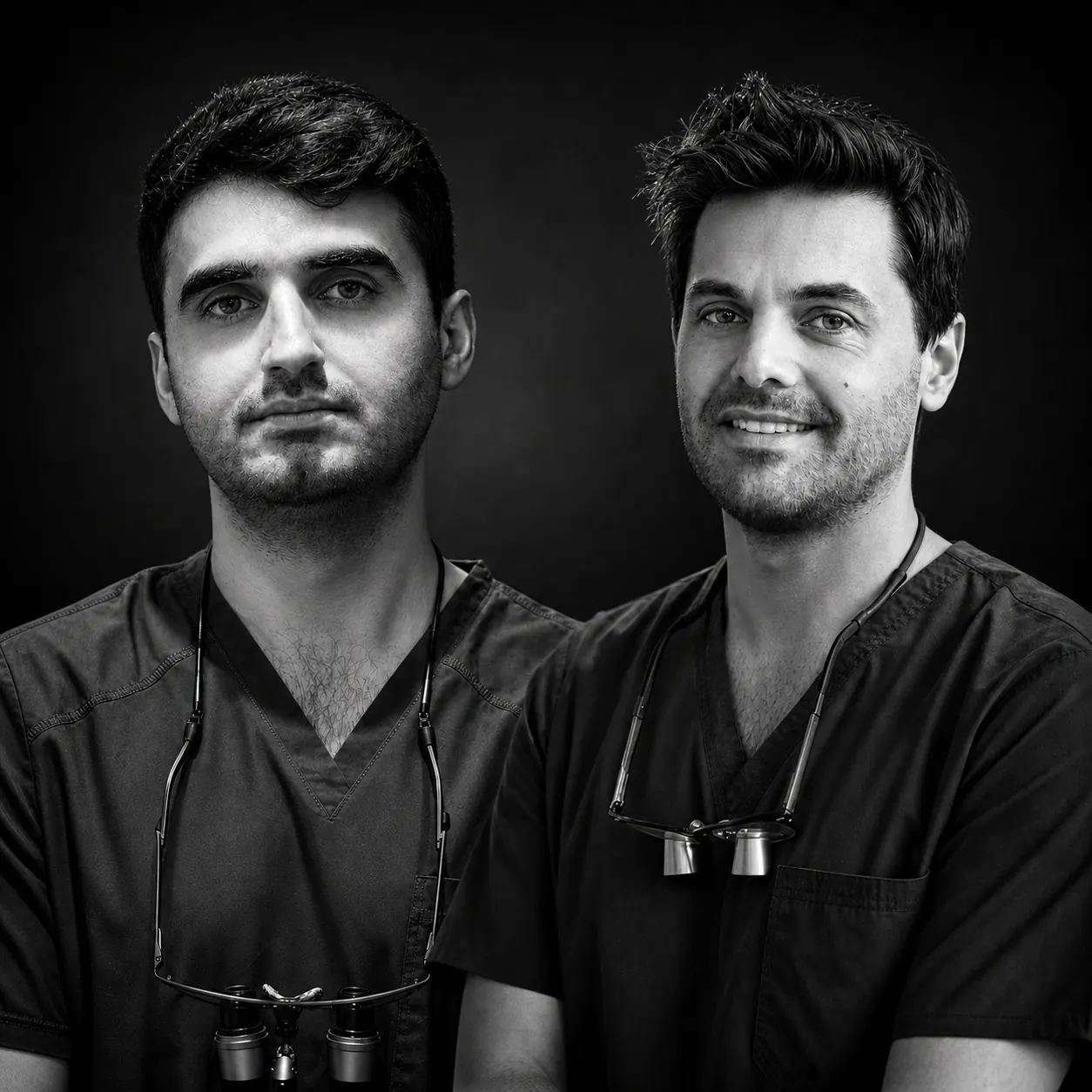
Learn with Dr. Sahand Shirzadi Maryan and Dr. Sergi Rivas Frau. Connect theoretical foundations with periodontal, regenerative, implant and restorative decisions.
Arranged individually. We confirm eligibility, content, teaching language, dates, duration and fees before you make arrangements. An enquiry does not reserve a place.
You may want to observe a procedure, discuss a treatment plan or focus on a specific technique. Your qualifications, experience and objectives help us decide which format may fit. Clinical participation is a separate arrangement.
Advanced Surgical Observation
Qualified dentists and postgraduate clinicians seeking to observe advanced surgery.
Learning focus
Prepare through articles and theory, review the complex treatment plan before surgery, then connect the observed procedure with the clinical decisions.
For now, surgical observation, case mentorship and focused workshops are arranged individually with our team. We confirm eligibility, content, teaching language, dates, duration, location and fees before you make arrangements. An enquiry does not reserve a place.
Live observation depends on the case, schedule and patient consent. Workshop exercises or observation are included only when explicitly agreed.
Looking for treatment as a patient? Our planned supervised-care route has its own explanation of who provides treatment and how supervision works.
Read the evidence. Plan the case. Understand the surgery.
Learning starts before the surgical setting. We use journal articles and theoretical discussion to build the foundations, then show how those principles inform a complex treatment plan. The focus is the whole patient and intended restoration, not an isolated technique.
01
Build the foundations
What supports this approach?
Read selected journal articles and revisit diagnosis, anatomy, case selection and risk assessment. Discuss the strength and limits of the evidence behind established and evolving techniques.
02
Plan the complex case
How do the decisions fit together?
Before surgery, review the records, treatment alternatives, digital planning when relevant and the intended restoration. Understand the reasons for the sequence, staging and contingency decisions.
03
Connect plan and practice
How is the reasoning applied?
In observation, follow the agreed surgical case from an observer position. In mentorship or workshops, work through case decisions and focused learning activities. Participation follows the chosen format.
04
Debrief and reflect
What will you take back to practice?
Relate what you have seen or discussed to the original plan and articles. Explore limitations, healing assessment and further reading, and identify questions for continued learning.
Explore our documented cases and educational illustrations for an introduction to this way of thinking. They explain the principles; they are not surgical instructions or a complete training course.
Choose the educational format that matches your clinical level.
Tell us about your experience and learning goals. We will confirm available formats, eligibility, dates, duration and fees before you make arrangements. Supervised patient treatment is still in preparation.
Bring a clinical question. Explore the reasoning together.
Case mentorship focuses on how you assess a problem and build a treatment plan. Discuss periodontal, regenerative and implant care with OsteoPerio, from the information that shapes a decision to the reasons for a particular treatment sequence.
Qualified dentists undertaking postgraduate training and clinicians with existing surgical training can enquire. Tell us your experience and learning goals so we can discuss suitability and which format may be available.
Selected articles and discussion of current techniques form the theoretical foundation. We examine indications, evidence quality, limitations and how the ideas apply to the case.
Case discussion and planning feedback · no patient treatment
From information to a considered decision.
01 · Assess
Frame the question
Connect the history, clinical findings and available records. Identify what is known and what still needs assessment.
02 · Compare
Explore the options
Discuss alternatives, their limitations and the reasons for combining treatments or separating them into stages.
03 · Reflect
Clarify the reasoning
Identify the learning points, unresolved questions and what further assessment would inform the next decision.
An illustration of the discussion approach. The number of sessions, content and any written feedback are agreed individually; this is not a fixed programme or a promised treatment plan.
Start with the decision you find difficult.
A focused question helps make a case discussion useful. Examples of topics you could ask to explore include:
Gum recession and soft tissue
Which findings influence the coverage goal, graft choice and the limitations you explain to the patient?
Bone defects and implant timing
What information helps you consider grafting with implant placement versus a separate regenerative stage?
Implant positioning and restoration
How do the intended tooth, bone availability and soft tissue needs interact when reviewing a digital plan?
Healing and follow-up
What can the clinical photographs and review findings tell you, and what remains uncertain?
For the first enquiry, share your professional background and the topic you want to explore. Please leave patient names, identifying details and clinical files out of the initial form.
If a case discussion is arranged, the team can explain which records are relevant and how to provide them. Depending on the question, this may include a clinical summary, photographs, periodontal findings, existing imaging and the restorative goal.
Use appropriately anonymised material with the required patient permission. The records should help explain the question; missing information and the limits of those records are part of the discussion.
Educational feedback and patient care have different roles.
Mentorship provides a setting for clinical reasoning and professional learning. It does not include operating on patients, replace an examination or automatically transfer responsibility for a patient’s care. Treatment decisions remain with the treating clinician within their competence and agreed clinical arrangements.
If you want OsteoPerio to assess or treat a patient, use the referral route so the team can discuss the clinical request and appropriate next steps.
Availability, meeting format, teaching language, duration, fees, preparation and any follow-up or documentation should be confirmed with the team. No particular session format, accreditation or qualification is implied by an enquiry.
Your selected format is preselected in the education enquiry. You can change it there; an enquiry does not reserve a place.
Learning with care
Patient care comes first.
Every learning format respects the patient, the clinical setting and each participant’s agreed role.
Patient consent and clinical suitability guide observation and case use.
Case discussions use appropriately anonymised records.
Clinical priorities and the treating team’s directions come before educational activities.
Explore learning topics
Topics depend on the agreed format and your learning goals.
Periodontal diagnosis, phenotype assessment and surgical case selection
Clinical photography, CBCT review and digital documentation workflows
Soft tissue grafting around teeth and implants
Bone regeneration, ridge preservation and staged implant planning
Guided implant surgery, guide splints and prosthetically driven planning
Sinus lift and posterior maxilla treatment sequencing
Complication prevention, patient communication and follow-up planning
Dr. Sahand Shirzadi Maryan Dr. Sergi Rivas Frau
Practical questions
Before you enquire.
Who can enquire?
Qualified dentists, including those in postgraduate training, can enquire. Share your experience and learning goals so we can assess which format may suit you.
How are Academy programmes arranged?
For now, all programmes are arranged individually. Tell us your professional background, learning goals and preferred dates; we will discuss a suitable format and confirm the content, duration, teaching language, location and fee before you decide.
Can I perform surgery?
The supervised clinical programme is in preparation and not bookable. It is planned for qualified dentists, with both Sahand and Sergi present during surgery. Observation, mentorship and workshops do not include treating patients.
Is live surgery observation included?
Only if agreed for your format and permitted by the case, schedule and patient consent. Observation is not included in every programme.
Can I attend from abroad?
International dentists can enquire. Confirm eligibility, teaching language, dates and clinical location with the team before booking travel.
How long is a programme, and what does it cost?
Duration and fees are confirmed for the agreed format, content and arrangements. Tell us your goals and preferred timing. Before you commit, clarify what is included: preparation, teaching time, materials and any follow-up.
Which language will the teaching be in?
Confirm the teaching language with the team before arranging your programme or travel. The website language and written-enquiry language do not confirm the language used for teaching.
Are certificates or qualifications awarded?
Ask what participation documentation is included. The clinicians’ university qualifications do not imply that Academy programmes are university-accredited or award a specialist qualification.
Your next step
Tell us what you want to learn.
Share your professional background, preferred format and learning goals. For the first enquiry, please leave out patient-identifying details and clinical files.
01
Share your goals
Tell us your experience, interests, preferred timing and teaching language.
02
Discuss the fit
We review suitability and which formats may be available.
03
Confirm the details
Agree the content, dates, location, fees and participation requirements before making arrangements.